What Is a Label Printer Mechanism and How Does It Work?
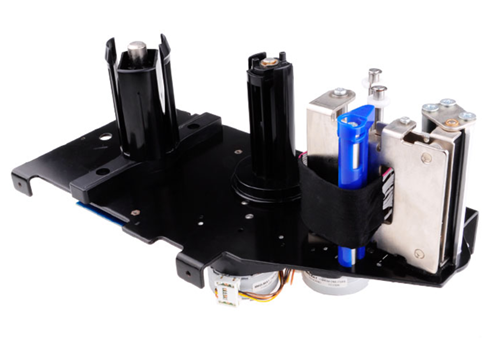
A label printer mechanism is one of the most essential components inside modern label printers used in retail, logistics, warehousing, healthcare, manufacturing, and countless embedded devices. While end users see a finished label coming out of a printer, the actual printing process is driven by a compact, highly engineered mechanism that handles heat, motion, sensing, and print control.
This article explains what a label printer mechanism is, how it works, and why it matters in today’s labeling systems.
1. What Is a Label Printer Mechanism?
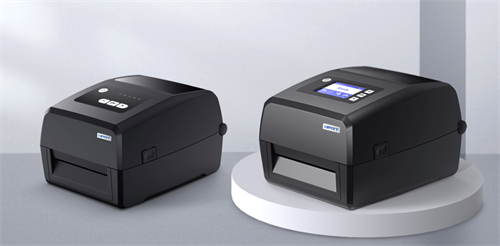
A label printer mechanism is the internal printing module responsible for producing text, graphics, barcodes, and QR codes on label materials. Unlike complete label printers that include housings, power supplies, communication ports, and firmware, a mechanism is the core engine—usually embedded inside:
• Industrial label printers
• Desktop label printers
• Mobile label printers
• POS systems
• Kiosk and vending machines
• Medical and laboratory equipment
A typical mechanism includes:
• Thermal printhead (203 or 300 dpi)
• Stepper motor and gear system
• Sensors for gap, black mark, and paper presence
• Control board
• Structural frame to hold everything in alignment
For device manufacturers and integrators, the mechanism is the primary element determining print quality, speed, durability, and compatibility.
2. How Does a Label Printer Mechanism Work?
Label printer mechanisms mainly rely on thermal printing technology, which eliminates the need for ink or toner. There are two printing methods:
(1) Direct Thermal Printing
• Uses heat-sensitive label material
• The printhead selectively heats areas to create dark text and images
• Ideal for shipping labels, receipts, and short-term tracking labels
(2) Thermal Transfer Printing
• Uses a ribbon (ink-coated film) placed between the printhead and label
• Heat transfers the ink to the label surface
• Produces durable labels suitable for industrial, chemical, medical, and outdoor environments
Both methods rely on the same basic mechanism structure. Here’s how they work step by step:
Step 1: Sensors Detect Media Position
Before printing begins, gap sensors or black-mark sensors identify label boundaries.
This ensures precise start positions and prevents misalignment—critical for barcodes and variable data.
Step 2: The Motor Drives the Label Forward
A high-precision stepper motor moves the label media under the printhead at a controlled speed.
The smoother and more consistent the motion, the better the print clarity.
Step 3: The Thermal Printhead Generates the Image
The printhead contains tiny heating elements arranged in a dense grid (dots per inch).
• Each element heats up momentarily
• The heat activates the thermal material or melts ink from the ribbon
• The pattern forms text, barcodes, graphics, or serialized data
This is where resolution—203 dpi, 300 dpi, or even higher—directly affects output quality.
Step 4: Firmware Controls Printing Logic
The mechanism’s control board translates print commands into:
• Dot activation signals
• Motor motion control
• Sensor reading synchronization
• Ribbon/label contact pressure adjustments
Even minor firmware inaccuracies can cause faded prints, misaligned labels, or unreadable barcodes, making mechanism-level coordination crucial.
3. Key Components of a Label Printer Mechanism
A high-quality mechanism depends on the performance of several critical components:
Thermal Printhead
Determines resolution, print density, image sharpness, and lifespan.
Stepper Motor
Controls label feeding accuracy and overall print consistency.
Sensors
Ensure each label is positioned correctly—important for die-cut labels and black-mark media.
Control Board
Manages communication, printing algorithms, and hardware operations.
Mechanical Frame
Provides rigidity to withstand fast-speed printing and high workloads.
4. Where Are Label Printer Mechanisms Used?
Label printer mechanisms are widely integrated into:
• Logistics and warehouse systems
(shipping labels, carton labels, inventory tracking)
• Retail labeling devices
(price tags, shelf labels, POS receipts)
• Industrial labeling equipment
(asset labels, compliance labels)
• Medical and laboratory devices
(sample tube labels, patient ID labels)
• Self-service kiosks
(queue tickets, parking receipts, vending machines)
Any device requiring on-demand, reliable, and compact printing depends on an embedded mechanism.
A label printer mechanism is far more complex than it appears from the outside. Combining thermal printheads, motors, sensors, and intelligent control systems, the mechanism enables precise, high-speed, and reliable label printing across multiple industries.
Understanding how these mechanisms work helps engineers, integrators, and device manufacturers choose the right printing components for their applications.