EU Battery QR Code Requirements for 2027: What They Mean for Label Printing
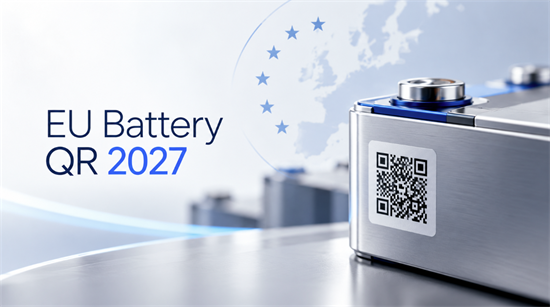
Starting 18 February 2027, batteries covered by the EU Battery Regulation (EU) 2023/1542 must carry a QR code. Certain batteries will also require a digital battery passport, accessible through that code.
For battery manufacturers, importers, and labeling teams, this introduces new requirements for product identification, information access, and QR code marking. Here's what the regulation says and what businesses should consider when preparing their labeling and printing processes.
What Changes Under the EU Battery Regulation in February 2027?
Under Article 13(6) of Regulation (EU) 2023/1542, batteries within the regulation's scope must be marked with a QR code from 18 February 2027. However, not every battery requires a digital battery passport.
Article 77 introduces a separate passport requirement for three battery categories placed on the market or put into service from that date.
Battery category | QR code | Digital battery passport |
Electric vehicle (EV) batteries | Required | Required |
Light means of transport (LMT) batteries | Required | Required |
Industrial batteries with capacity greater than 2 kWh | Required | Required |
Other batteries covered by the regulation | Required | Not required solely under Article 77 |
LMT batteries include those used in certain electric bicycles and scooters. Other covered batteries, such as many portable batteries, still need QR codes but follow different information requirements.
Importantly, the February 2027 passport deadline concerns batteries placed on the market or put into service from that date. It does not automatically require every battery already in use to receive a new passport.
What Information Must the Battery QR Code Provide?
The information accessed through the QR code depends on the battery category.
✔️ Batteries requiring a digital passport: The QR code links to a unique identifier associated with the battery passport. Under Article 77, the passport contains information about the battery model and individual battery, including applicable technical, performance, and lifecycle data. Some information is publicly accessible, while other data is restricted to authorized parties.
✔️ Other batteries: The QR code must provide access to the applicable labeling information under Article 13(1)–(5), the EU declaration of conformity, the report referenced in Article 52(3), and specified waste-battery prevention and management information, subject to the relevant requirements and application dates.
✔️ Starting, lighting, and ignition (SLI) batteries: The QR code must additionally provide information on the amount of recycled cobalt, lead, lithium, or nickel present in active materials, as specified in Article 13(6)(c).
For batteries requiring passports, the economic operator placing the battery on the market is responsible for ensuring that passport information is accurate, complete, and up to date.
The key distinction: A QR code is the access point, not the battery passport itself. Printing a scannable code does not establish that the required information is complete or compliant.
What Are the QR Code Marking and Printing Requirements?
The regulation specifies how battery QR codes must be marked and read, while leaving manufacturers flexibility in selecting suitable marking technologies.
• Marking and placement
Under Article 13(7), battery labels and QR codes must be visibly, legibly, and indelibly printed or engraved on the battery.
Where direct marking is not possible or not warranted because of the battery's nature and size, the labels and QR code must instead be affixed to both the packaging and the documents accompanying the battery.
This exception is based on the battery's physical characteristics, rather than a manufacturer's preference for packaging design or lower labeling costs.
• QR code readability
Annex VI, Part C requires QR codes to have high contrast against their background and be large enough for easy reading with commonly available QR readers, including those integrated into smartphones.
The regulation does not prescribe a universal QR code size, barcode label printer resolution, or printing technology. In other words, there is no blanket EU requirement to use a 300 dpi printer or a particular label material for battery QR codes.
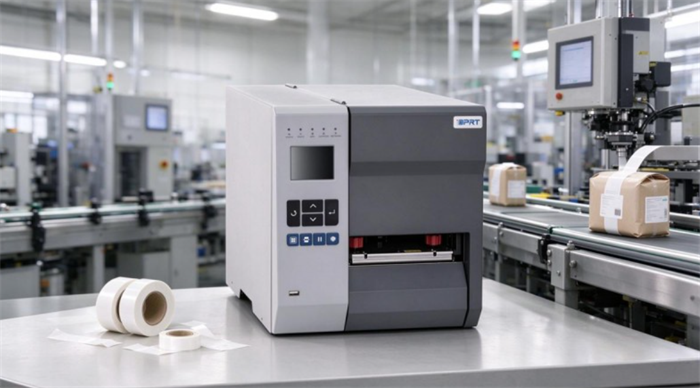
However, Article 77(3) separately specifies ISO/IEC 15459 standards, or their equivalents, for battery passport QR codes and unique identifiers.
• Implications for label printing
Manufacturers may consider thermal transfer labeling, direct marking, or other suitable technologies depending on the battery surface, available marking area, and expected handling conditions.
For example, a QR code printed on an adhesive label needs to remain readable on the finished product. Label adhesion, abrasion, moisture, and exposure to operating or storage conditions may all affect marking durability.
Before approving a printing process, businesses should consider three practical checks:
Verification area | What to check |
Marking quality | Is the QR code clear, durable, and readable on the finished battery or label? |
Data linkage | Does scanning the code lead to the correct identifier and required information? |
Process consistency | Can the marking process maintain acceptable quality across production batches? |
These are practical quality-control recommendations, not a separate testing checklist prescribed by the regulation.
A successful scan on a sample label is a useful starting point, but businesses should also evaluate the finished marking under relevant handling and environmental conditions.
How Should Battery Manufacturers Prepare for the 2027 Requirements?
With the application date approaching, battery businesses should review both their labeling processes and the information systems behind their QR codes.
1. Confirm battery classification. Identify which products fall within the regulation and whether they require a digital battery passport.
2. Prepare QR code information. Determine the required information, unique identifier arrangements where applicable, and responsibility for maintaining accurate data.
3. Review marking methods. Assess the available battery surface, suitable printing or engraving methods, and whether the packaging exception applies.
4. Test finished QR codes. Check readability, contrast, durability, and data linkage on actual products. For high-volume production, verify consistency across batches.
5. Follow official updates. Review the current regulation, applicable delegated and implementing acts, and European Commission guidance as implementation progresses.
For further guidance, the European Commission's Digital Batteries Passport – Data Points by Category (August 2026) explains which data fields apply to different battery categories. Not every listed field is mandatory, and the guidance does not introduce new legal obligations.
Ultimately, the 2027 requirements involve more than adding a QR code to a battery label. Businesses need a marking process that produces durable, readable codes and an information system that connects them to the correct data.
For manufacturers and labeling teams, preparing both elements together can help avoid last-minute changes to product markings and production workflows.
Recent posts
Previous article
Thermal Printhead Life: How Long Does It Last and What Affects It?
Next article