Thermal Printer Mechanism OEM/ODM Guide for Manufacturers
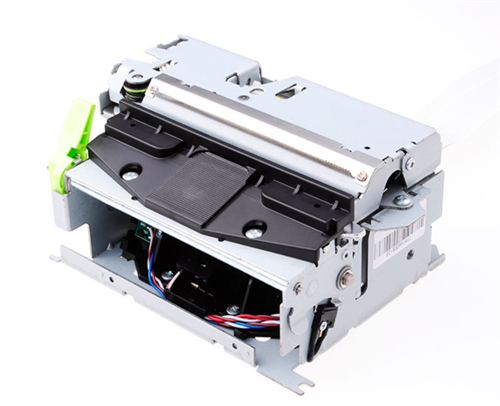
As embedded printing becomes essential in kiosks, POS terminals, vending systems, medical devices, and handheld equipment, the need for thermal printer mechanism OEM/ODM services continues to grow. Manufacturers and solution developers require mechanisms tailored to specific dimensions, durability, and performance needs. This guide offers a clear overview of OEM/ODM thermal printer mechanisms and how to choose suitable solutions for product development.
1. What Is a Thermal Printer Mechanism?
A thermal printer mechanism is the core printing module found inside devices like POS terminals, portable receipt printers, medical analyzers, ticketing machines, and kiosk systems. It typically includes:
• Thermal printhead (203/300 dpi)
• Stepper motor
• Gear system
• Sensors (paper detection, temperature, gap/mark)
• Control board or interface board
Instead of being a complete printer, a mechanism is designed to be integrated directly into a host device. This makes it the preferred choice for equipment manufacturers who require embedded printing functionality.
2. Understanding OEM and ODM in Thermal Printer Mechanisms
OEM (Original Equipment Manufacturer)
OEM services provide custom production based on the customer’s specifications. The customer already has a product design or requirement, and the supplier produces the mechanism accordingly.
Example OEM needs:
• Matching existing product dimensions
• Specific printhead life-cycle requirements
• Custom cable lengths or connector types
• Compatibility with an existing motherboard or OS
ODM (Original Design Manufacturer)
ODM services involve supplier-provided design + customer-level customization.
Ideal for companies without in-house printer engineering resources.
Common ODM needs:
• Quick development of a new print module
• Structural design provided by supplier
• Optional feature add-ons (cutters, bezels, sensors)
• Reduced R&D cost and faster time-to-market
OEM is about “make this design for me,” while ODM is “help me design the solution I need.”
3. What Components Can Be Customized in OEM/ODM Thermal Printer Mechanisms?
Thermal mechanisms are highly modular, and a wide range of features can be tailored for device integration.
✔ Printing Specifications
• Print width (48mm/58mm/80mm/112mm)
• DPI resolution: 203 dpi or 300 dpi
• Printing speed (60–250 mm/s depending on application)
✔ Structural Customization
• Dimensions to fit compact spaces
• Mounting hole positions
• Top-open or front-open cover designs
• Paper loading structure
✔ Interface & Electronics
• USB / RS232 / TTL
• Bluetooth or Wi-Fi modules for wireless applications
• Firmware customization for command protocols
• Compatibility with Android, Linux, or Windows devices
✔ Environmental & Durability Requirements
• Anti-condensation treatment for cold-chain usage
• Enhanced motor durability for high-duty cycles
• Reinforced mechanics for industrial settings
4. Who Needs OEM/ODM Thermal Printer Mechanisms? (Industry Use Cases)
1) Self-Service Kiosks
• Ticketing and queuing systems
• Parking payment terminals
• Self-checkout and self-ordering machines
These devices rely on customized mechanisms due to space constraints and high-duty cycles.
2) POS and Retail Equipment
Retail equipment manufacturers require:
• Fast receipt printing
• High printhead reliability
• Compatibility with POS operating systems
OEM mechanisms allow seamless integration into compact POS housings.
3) Vending and Smart Machine Manufacturers
Vending machines, parcel lockers, and smart cabinets commonly use:
• 58mm or 80mm print modules
• ODM-designed mounting structures
• Custom sensors for paper-out or jam detection
4) Mobile and Handheld Devices
Handheld terminals need:
• Lightweight, low-power mechanisms
• Shock-resistant structure
• Custom battery interfaces
This is a major area for custom thermal printer mechanisms.
5) Medical and Laboratory Devices
Thermal mechanisms are used in:
• Diagnostic testing equipment
• Laboratory analyzers
• Patient monitoring devices
These require stable OEM modules that meet regulatory durability expectations.
5. How to Choose the Right OEM/ODM Supplier
Manufacturers evaluating OEM/ODM thermal printer mechanisms should consider:
✔ Technical expertise
Does the supplier have long-term experience in embedded printing module design?
✔ Customization capability
Can they provide structural, firmware, and interface customization?
✔ Production capacity & supply chain stability
Are they able to support consistent production over years?
✔ Durability and testing standards
Do mechanisms undergo testing for:
• Printhead life
• Motor durability
• Drop resistance
• Temperature/humidity reliability
✔ Development support
Is there an engineering team that assists with integration, drivers, and firmware?
These factors directly determine how smoothly the print module integrates into your product.
Conclusion
The demand for thermal printer mechanism OEM/ODM and custom thermal printer mechanisms is rising as more industries integrate embedded printing into their devices. From kiosks and POS terminals to medical equipment and handheld systems, OEM/ODM solutions enable manufacturers to achieve the required performance, compatibility, and reliability while reducing R&D time and cost.
Choosing the right thermal mechanism provider is essential for ensuring long-term stability, efficient integration, and successful product development.
Recent posts
Previous article