How Compact and Modular Thermal Printer Mechanisms Improve Embedded Device Design
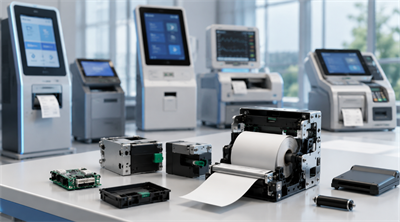
As self-service kiosks, POS terminals, medical devices, and portable equipment become smaller and smarter, the components inside them must evolve as well. One example is the thermal printer mechanism.
Modern thermal printer mechanisms are no longer just printing components. Their size, structure, and ease of integration can directly affect product design, maintenance efficiency, and user experience. This is why compact and modular designs have become major trends in the thermal printing industry.
What Is a Thermal Printer Mechanism?
A thermal printer mechanism is the core printing unit inside a thermal printer. It typically includes the printhead, paper feed system, sensors, motor, and other mechanical components responsible for moving paper and creating printed output.
Unlike a complete printer, a mechanism is designed to be integrated into another device, such as a kiosk, POS terminal, ticket machine, medical analyzer, or handheld system.
Because it becomes part of a larger product, its physical design is often just as important as its printing performance.
Why Are Compact Thermal Printer Mechanisms Becoming More Important?
Many modern devices face strict space constraints.
A retail POS terminal may need to fit a printer, payment module, display, and communication hardware into a limited enclosure. A kiosk must provide printing functionality without making the machine larger. Portable devices require lightweight components to improve mobility.
A compact thermal printer mechanism helps manufacturers:
· Reduce device size
· Lower overall weight
· Increase design flexibility
· Create cleaner product layouts
In many projects, saving a few millimeters of space can significantly simplify the entire product design.
How Does Modular Design Simplify Integration?
Traditionally, integrating a printer into a device often required extensive customization. Today, many thermal printer mechanisms are designed with a modular architecture.
A modular mechanism allows manufacturers to select different options based on their application, such as:
· Paper widths
· Auto cutter modules
· Interface boards
· Sensor configurations
· Mounting methods
This approach shortens development cycles and reduces engineering effort.
Instead of redesigning the entire printing system, developers can adapt a standardized module to different products.
What Problems Does Easy-Loading Design Solve?
Paper replacement is one of the most common maintenance tasks in any thermal printing system.
Older designs often required operators to manually thread paper through a narrow paper path, which increased the risk of incorrect loading and paper jams.
Easy-loading mechanisms simplify this process. Users simply open the cover, place the paper roll inside, and close the lid.
The benefits include:
· Faster paper replacement
· Reduced operator errors
· Less downtime
· Lower maintenance costs
This feature is especially valuable in self-service kiosks, retail environments, and healthcare facilities where non-technical users may need to replace paper.
Why Does the Paper Feed System Matter So Much?
When discussing printer performance, many people focus on print resolution or speed. However, the paper feed system often has an equally important impact.
A well-designed paper feed system helps ensure:
· Accurate paper positioning
· Consistent print alignment
· Reliable barcode readability
· Reduced paper waste
Poor paper feeding can lead to skewed prints, cutting errors, paper jams, and wasted receipts.
For applications such as ticketing, barcode labels, and receipts, even small paper positioning errors can affect usability and scanning performance.
When Is an Auto Cutter Necessary?
Not every thermal printer mechanism requires an auto cutter, but it can be extremely useful in many applications.
Auto cutters are commonly used in:
· Self-service kiosks
· Ticketing systems
· Parking machines
· Queue management terminals
· Retail receipt printers
By automatically separating printed documents, auto cutters improve convenience and create a better user experience.
However, they also add cost and mechanical complexity. For simple portable devices or low-volume applications, a cutter may not be necessary.
How Do Compact Mechanisms Maintain Reliability?
A common assumption is that making a printer mechanism smaller automatically reduces performance. In reality, modern designs focus on balancing size and reliability.
Manufacturers must carefully optimize:
· Motor performance
· Printhead pressure
· Paper path design
· Heat dissipation
· Mechanical durability
The goal is not simply to make the mechanism smaller, but to ensure stable performance over thousands or even millions of print cycles.
A compact mechanism that frequently jams or wears out quickly provides little value in real-world applications.
Which Applications Benefit Most from Compact and Modular Designs?
Several industries benefit from these innovations:
Application | Key Requirement |
Mobile POS | Lightweight, compact size |
Self-service kiosks | Easy maintenance, auto cutter |
Medical devices | Compact integration, reliability |
Parking terminals | Stable operation, anti-jam design |
Ticketing systems | Fast printing and accurate paper feeding |
Although the requirements differ, all of these applications benefit from mechanisms that are easier to integrate and maintain.
What Should Engineers Consider Before Choosing a Thermal Printer Mechanism?
Selecting the right mechanism involves more than checking print speed or resolution.
Engineers should evaluate:
· Available installation space
· Paper width requirements
· Easy-loading capability
· Auto cutter needs
· Paper feed accuracy
· Sensor configuration
· Power requirements
· Expected printing volume
A mechanism that fits the application well often delivers better long-term performance than one with higher specifications on paper.
Final Thoughts
The evolution of the thermal printer mechanism is no longer focused solely on printing. Compact structures, modular architectures, easy-loading designs, and precise paper feed systems are changing how printers are integrated into modern devices.
The real value of these innovations is not simply saving space. A well-designed thermal printer mechanism can reduce maintenance effort, improve reliability, minimize paper waste, and help manufacturers build more efficient products.
As embedded devices continue to evolve, compact and modular thermal printer mechanisms will remain a key part of the next generation of POS terminals, kiosks, medical equipment, and smart self-service systems.