How Barcode Printers Enable Vaccine Tracking and Anti-Counterfeiting
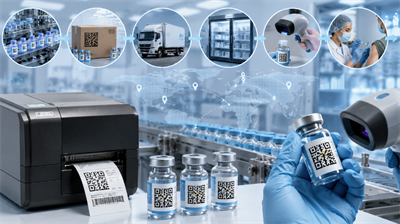
Vaccine distribution is one of the most critical components of global public health. Ensuring that vaccines reach their destinations safely, without counterfeits, and with traceable information is essential for both regulatory compliance and patient safety. Behind every effective vaccine traceability system lies a surprisingly crucial tool: the barcode printer.
Barcode printers do more than just print labels. They generate unique identifiers that carry essential information about each vaccine batch, including origin, expiration date, and serial numbers. These codes, typically 2D DataMatrix or QR codes, are the starting point of a robust traceability system that spans manufacturing, distribution, and administration.
Why Vaccine Traceability Matters More Than Ever
The recent global emphasis on vaccine safety highlights why traceability is no longer optional. Vaccines move through complex supply chains—from manufacturers to distributors, cold storage facilities, hospitals, and clinics. Any break in this chain could result in:
· Distribution errors
· Expired vaccines reaching patients
· Difficulty recalling defective batches
· Exposure to counterfeit products
A reliable barcode printing system ensures that every vaccine is uniquely identifiable, facilitating both preventive measures and reactive responses when issues arise.
How Are Vaccines Tracked Throughout the Supply Chain?
Vaccine tracking relies on consistent labeling at each stage:
1. Manufacturing – Each vaccine vial or package is assigned a unique batch and serial number encoded in a 2D barcode.
2. Distribution – Barcodes are scanned at warehouses and during transportation to record their movement.
3. Cold Storage – Scans verify that vaccines remain in controlled conditions and have not expired.
4. Administration – Healthcare providers scan the barcode before administering the vaccine, ensuring correct dosage and verifying authenticity.
At every step, the barcode acts as the link between the physical product and the digital record, making the printer's role foundational.
What Information Is Stored in a Vaccine Barcode?
A single barcode can contain multiple critical data points:
· Global Trade Item Number (GTIN) – identifies the product type
· Batch Number (Lot Number) – identifies the production batch
· Serial Number – ensures each vial is unique
· Expiration Date – ensures timely administration
When properly printed, these barcodes enable instant verification at any point along the supply chain, supporting real-time tracking and quality assurance.
Why Are 2D Barcodes Used for Vaccine Traceability?
2D barcodes, such as DataMatrix or QR codes, are preferred in healthcare because they can hold more information in a smaller space than traditional 1D barcodes. They are also more resilient to damage, allowing for reliable scanning even if the label is slightly worn or bent.
In addition, regulatory standards in many countries now mandate 2D barcodes for serialization, making them essential for compliance and anti-counterfeiting.
What Role Does a Barcode Printer Play in Vaccine Tracking?
The barcode printer is the starting point for traceability. Without high-quality printing:
· Serial numbers may be unreadable
· Scans may fail at any stage
· Traceability systems cannot reliably identify batches
A reliable printer ensures that 2D codes are sharp, properly aligned, and scannable. For pharmaceutical manufacturers, this means fewer errors, less wasted inventory, and faster integration with traceability software.
How Do Barcode Printers Help Prevent Counterfeit Vaccines?
Counterfeit vaccines pose serious health risks. Barcode printers help prevent this by:
· Assigning unique, non-repeating identifiers to each vial or package
· Enabling instant verification at distribution points
· Supporting serialization programs that link physical products to official records
With proper scanning and database management, a legitimate barcode confirms the authenticity of a vaccine, reducing the risk of counterfeit products entering the supply chain.
How Does Barcode Printing Support Faster Product Recalls?
Even with careful production and distribution, problems can arise. Barcode printers make recalls more efficient:
· Scan records quickly identify affected batches
· Digital logs show exactly where each batch was shipped
· Hospitals and distributors can isolate specific vials instead of discarding entire shipments
Without barcode printing, traceability becomes a manual, error-prone process. Labels that are clear, durable, and scannable save time and protect patients.
What Should Pharmaceutical Companies Look for in a Barcode Printer?
Selecting the right printer is critical. Companies should consider:
· Resolution – At least 300 dpi to ensure DataMatrix readability
· Print consistency – Avoid faded or smudged labels
· Volume capacity – Supports the expected batch sizes
· Integration – Compatible with serialization and supply chain software
· Durability – Can reliably print on chemical-resistant or cold-chain labels
Investing in a high-quality barcode printer protects both operational efficiency and regulatory compliance.
Why Printing Quality Is Just as Important as the Barcode Itself
A well-designed barcode is only effective if the printer produces a scannable, reliable label. Poor print quality can break the traceability chain, resulting in:
· Failed scans
· Delayed vaccine administration
· Increased operational costs
· Inaccurate inventory tracking
High-quality printing ensures the barcode serves its purpose throughout the supply chain, from production to patient administration.
The Future of Vaccine Traceability
As the healthcare industry evolves, barcode printing will remain a cornerstone of traceability. Future innovations may include:
· Real-time scanning and cloud integration
· IoT-enabled printers for automatic batch updates
· Environmental sensors embedded into labels for cold-chain monitoring
Regardless of these advances, the role of the barcode printer as the starting point of traceability remains central.