Integrating KIOSK Print Modules for Airport Boarding Pass Printers: The Integrator's Guide
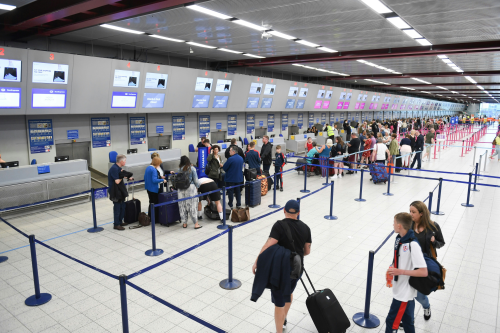
For system integrators developing check-in counters and self-service kiosks, selecting the right KIOSK Print Module is critical for reliable boarding pass printing. This technical guide focuses exclusively on KIOSK Print Module mechanical specifications, mounting considerations, electrical integration, and deployment best practices for airport applications.
What Defines a KIOSK Print Module for Airports?
Unlike standalone desktop printers, KIOSK Print Modules are engineered for seamless enclosure integration with three key differences:
1. Panel-mount design (front/rear panel installation)
2. Simplified user interfaces (no control panel, software-controlled only)
3. Standardized mounting patterns for kiosk enclosures
Core KIOSK Module Characteristics:
✅ Panel cutout: 80x300mm standard pattern
✅ Rear paper loading (250mm diameter rolls)
✅ No bezel/casing (mounts flush to kiosk surface)
✅ Cable management ports for USB/Ethernet routing
✅ Vibration-resistant mounting (±2G airport environment)
Mechanical Integration Specifications
Standard Mounting Dimensions
KIOSK Print Module Mounting Template:
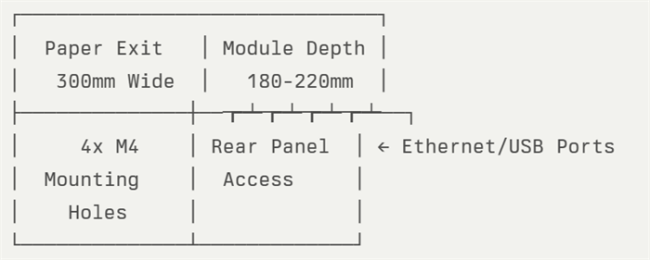
Typical KIOSK Module Dimensions:
- Width: 268mm (panel cutout requirement)
- Height: 80mm
- Depth: 195mm (excluding paper roll protrusion)
- Weight: 2.8kg
- Paper Roll: 216mm width, Ø250mm max diameter
Thermal & Ventilation Requirements
Operating Environment:
- Temperature: 5-45°C (kiosk must dissipate 50W heat)
- Humidity: 20-85% RH (condensation-free)
- Airflow: 10CFM front-to-back through print compartment
- Dust Filter: Required over ventilation slots
Electrical & Interface Integration
Power Architecture
- Power Input: 24VDC / 3A (72W peak during cutter operation)
- Connector: Phoenix 3-pin (V+/GND/Power Good signal)
- Inrush Current: <10A (critical for shared kiosk PSU)
- Standby Power: <0.5W (Energy Star compliant)
- Power Sequencing: PSU → Module → Host Controller
Communication Interfaces
- Primary: USB 2.0 High-Speed (480Mbps, printer class)
- Fallback: 10/100 Ethernet (static IP, AEA over TCP)
- Legacy: RS232C (19200bps, 8N1, RTS/CTS flow control)
- Status: 4-pin GPIO (paper low, cover open, cutter jam, ready)
Standard KIOSK Wiring Harness:
USB-B → Host USB Controller (5m max cable length)
RJ45 → Kiosk Ethernet Switch (Cat5e, shielded)
24V → Dedicated 5A circuit from kiosk PSU
4-pin → Printer Status Monitoring (opto-isolated)
Integration Best Practices
Mechanical Design Checklist
✅ 5mm clearance around panel cutout (thermal expansion)
✅ Rear access panel for paper refill (15s operation target)
✅ Vibration isolation mounts (4x rubber grommets, 20N rating)
✅ Dust filter over all ventilation slots (IP54 minimum)
✅ Cable strain relief (20N pull test compliance)
✅ Paper exit chute (45° angle, prevents ticket curl)
Electrical Design Checklist
✅ Dedicated 24V/5A circuit (no sharing with motors/displays)
✅ EMI shielding on USB/Ethernet cables (<30cm runs)
✅ Lightning protection (airport power quality requirement)
✅ Power loss graceful shutdown (buffer last 3 tickets)
✅ Status LED routing to kiosk front panel
Paper Path Optimization:
- Rear Loading: 250mm Ø rolls (500m paper, 30-day capacity)
- Auto-Cutter: Guillotine type, 2M cut cycles minimum
- Paper Low Sensor: 20m remaining trigger point
- Ticket Stacking: 30°exit angle + deflector plate
Field Deployment Considerations
Paper Management Strategy:
Bulk Paper Rolls: 500m rolls reduce refill frequency 75%
Predictive Alerts: Paper-low → central monitoring system
Standardization: ATB paper across all airlines (0.10mm ±0.01mm)
Backup Paper: 2x spare rolls per 10 kiosks
Maintenance Access Design:
Refill Time Target: 15 seconds (one-handed operation)
Error Clearance: Cover-open sensor auto-resumes printing
Self-Diagnostic: Test print button (rear access only)
Service Mode: USB recovery port for firmware updates
Environmental Hardening:
Vibration: ±2G / 5-500Hz (taxiing aircraft, cleaning equipment)
Temperature Cycling: -10°C to +50°C storage/transport
Humidity: 10-90% RH non-condensing
MTBF Target: 500,000 boarding passes (2-year warranty)
As self-service systems move toward remote monitoring, mixed legacy-IP control, and reduced on-site staffing, KIOSK print modules are increasingly judged by serviceability rather than raw specifications. Mechanical access, power stability, and paper handling now influence uptime as much as firmware or interfaces. For integrators, long-term operability is becoming a primary design constraint, not an afterthought.