Types of Thermal Printheads and Their Classification
Thermal printheads are the core components of thermal printers, directly affecting print quality, speed, durability, and application suitability. However, many users are confused by how thermal printheads are classified, because there is no single universal way to categorize them.
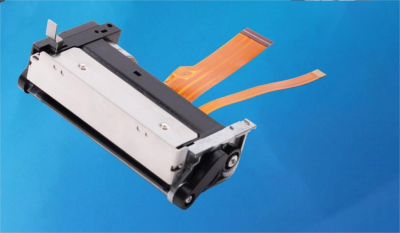
In practice, the thermal printing industry classifies thermal printheads across multiple dimensions, depending on whether the focus is on printing method, internal structure, mechanical design, or application scenario.
This guide provides a clear, practical overview of the main types of thermal printheads, how they differ, and where each type is commonly used.
1. Classification by Printing Method (Application-Oriented)
This is the most common and most practical classification, because it directly relates to how the printer is used.
1.1 Direct Thermal (DT) Printheads
Direct thermal printheads work with heat-sensitive thermal paper.
When heat is applied, the coating on the paper darkens to form text or images—no ribbon or ink is required.
Key characteristics:
• Requires thermal paper
• No ribbon or ink
• Simple structure and low operating cost
Typical applications:
• POS receipts
• Logistics and shipping labels
• Tickets (transportation, parking, events)
• Short-term identification labels
Limitations:
✖️ Prints are sensitive to heat, light, and friction
✖️ Not suitable for long-term archival documents
Direct thermal printheads are widely used where speed, simplicity, and cost efficiency matter more than long-term durability.
1.2 Thermal Transfer (TT) Printheads
Thermal transfer printheads use heat to melt ink from a ribbon, transferring it onto paper, label stock, or synthetic media.
Key characteristics:
• Requires ribbon
• Compatible with many media types
• Produces durable, high-contrast prints
Typical applications:
• Barcode labels
• Industrial and logistics labels
• Product identification and traceability
• Date coding and compliance labeling
Advantages:
✔️ Excellent resistance to fading, abrasion, and chemicals
✔️ Suitable for long-term storage and harsh environments
Many industrial label printers use DT/TT-compatible mechanisms, allowing the same printer to operate in either mode depending on the media and ribbon configuration.
2. Classification by Heating Element Structure and Manufacturing Process
From an engineering and component-selection perspective, thermal printheads are commonly classified by how the heating elements are manufactured.
2.1 Thick-Film Thermal Printheads
Thick-film thermal printheads use a relatively thick resistive layer, typically applied using screen-printing techniques.
Key characteristics:
• Mature and stable manufacturing process
• Lower production cost
• Good durability for general applications
Common uses:
• Receipt printers
• Entry-level and mid-range label printers
• Weighing scale printer mechanisms
Trade-offs:
• Slightly slower thermal response
• Lower maximum resolution compared to thin-film designs
2.2 Thin-Film Thermal Printheads
Thin-film thermal printheads use extremely thin resistive layers, formed through sputtering or other advanced thin-film processes.
Key characteristics:
• Faster heating and cooling response
• Higher resolution capability
• More precise thermal control
Common uses:
• High-speed label printers
• Industrial barcode printers
• Applications requiring 300 dpi, 600 dpi, or higher
Considerations:
• Higher manufacturing cost
• Typically used in premium or industrial equipment
Most printer mechanism datasheets will specify printhead type as:
Thermal Printhead, 203/300 dpi, Thick-Film or Thin-Film
3. Classification by Mechanical Installation and Media Path
Another practical way to classify printheads is by how they are mechanically installed in the thermal printer mechanism.
3.1 Flat-Type Thermal Printheads
Flat-type printheads press directly against the media in a relatively flat contact path.
Common in:
• Receipt printers
• Standard label printers
• Ticket printers
They are well-suited for flexible media such as paper and label stock.
3.2 Edge-Type Thermal Printheads
Edge-type printheads position the heating elements closer to the edge of the printhead structure.
Advantages:
✔️ Better performance on rigid or less flexible media
✔️ Improved print consistency on cards or thick substrates
Common in:
• Industrial printers
• Card printing mechanisms
• Specialized labeling systems
4. Line Printheads vs. Serial/Dot-Matrix Thermal Heads (Background Knowledge)
For completeness, thermal printheads can also be classified by dot arrangement:
Line thermal printheads:
A full row of heating dots spans the entire print width. This is the dominant design in modern receipt and label printers.
Serial or matrix-style thermal heads:
Older or compact designs where dots move across the print width mechanically. These are now rare and mainly found in legacy or niche devices.
Choosing the Right Thermal Printhead
There is no single “best” thermal printhead—only the most suitable one for a given application.
✔️ Direct thermal printheads excel in fast, low-cost, short-term printing
✔️ Thermal transfer printheads are preferred for durability and long-term identification
✔️ Thick-film designs balance cost and reliability
✔️ Thin-film designs enable high speed and high resolution
Understanding these classifications helps users, engineers, and buyers make informed decisions when selecting printers, printer mechanisms, or replacement printheads.