How to Evaluate 4-Inch Thermal Printer Mechanisms for High-Volume Logistics and Warehousing
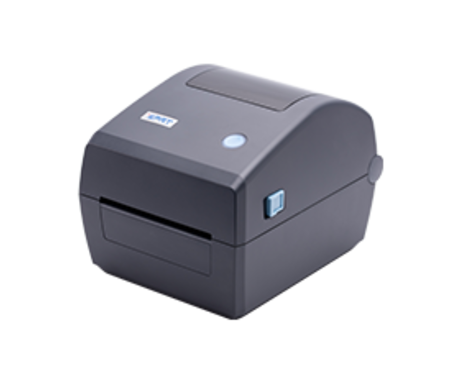
In high-volume logistics and warehousing, 4-inch thermal printer mechanisms are expected to handle continuous label output with consistent speed and reliability. For shipping and sorting operations, the most important evaluation points are printhead lifespan, cutter durability, print speed, media handling, and maintenance accessibility.
Why 4-inch mechanisms matter
The 4-inch format, typically around 112 mm, is the standard shipping label size and many warehouse applications. It offers enough print area for barcodes, routing information, and compliance labels while remaining compact enough for integration into desktop, embedded, and industrial printers.
In real logistics environments, a mechanism may be required to print thousands of labels per shift. That makes mechanical stability and thermal control more important than peak specifications alone.
Key performance parameters
A reliable 4-inch thermal printer mechanism should be evaluated on several core specifications:
• Printhead lifespan: Industrial mechanisms are often designed for extended duty cycles, with high-end models rated at around 150 km of printed media or more, depending on media type and usage conditions.
• Cutter life: For models with an auto cutter, a service life of around 2 million cuts is often used as a reference point in high-volume applications.
• Print speed: Common logistics models support 250 mm/s to 300 mm/s, while some high-performance designs can go beyond that.
• Paper width: Standard 4-inch mechanisms usually support 108 mm to 112 mm media width, with some models offering wider adjustment ranges.
• Operating environment: Many industrial-grade mechanisms are designed to work in environments from 0°C to 40°C, with wider tolerance depending on the product.
These values are not universal standards, but they are useful benchmarks when comparing different suppliers.
Printhead and thermal control
The thermal printhead is the core of the mechanism. In direct thermal printing, it repeatedly heats and cools at high speed, so both physical wear and thermal stress affect long-term performance.
For logistics use, printhead durability depends on:
• Media quality
• Print density
• Print duty cycle
• Roller pressure
• Cleaning frequency
A mechanism with stable resistance distribution and good thermal control will produce more uniform barcodes and reduce the risk of faded or incomplete labels.
Cutter and media handling
In shipping label applications, the cutter is exposed to adhesive residue and paper dust. Over time, this can increase friction and reduce cut quality.
That is why industrial cutters usually use:
• High-hardness blades.
• Anti-adhesive surface treatment.
• A guillotine-style cutting structure.
• Motor systems with enough torque to maintain consistent cutting force.
For large roll media, the mechanism must also manage tension and feed accuracy. If the roll is too heavy or the paper path is unstable, it can lead to skew, jams, or barcode misalignment.
Manufacturer considerations
For brand selection, system integrators usually compare established Japanese suppliers and high-volume Chinese manufacturers.
Japanese brands such as Seiko Instruments, Fujitsu, and Citizen are often associated with precision mechanics, tight tolerances, and long-term consistency. They are commonly chosen for mission-critical applications where stability is a priority.
Chinese manufacturers such as HPRT have become strong alternatives in logistics, retail, and embedded printing. Their strengths often include competitive cost structure, flexible integration, and broader mechanism options for different OEM platforms.
In practice, brand choice should depend on application requirements, service expectations, and total cost of ownership rather than brand reputation alone.
Selection checklist
When evaluating a 4-inch thermal printer mechanism, integrators should confirm the following:
✔️Printhead life target and resistance consistency.
✔️Cutter duty cycle and cutting reliability.
✔️Supported print speed under continuous load.
✔️Media width and roll diameter compatibility.
✔️Sensor accuracy for gap and black mark detection.
✔️Operating temperature and environmental tolerance.
✔️Ease of cleaning, replacement, and service access.
For high-volume logistics, the best mechanism is not always the fastest one. It is the one that can maintain stable output, reduce downtime, and support the real workload of the system.