Why Laboratories Use Barcode Labels on Test Tubes and Specimen Vials
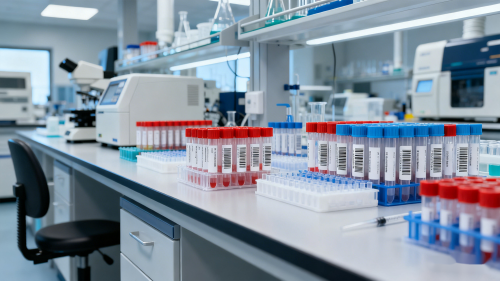
Medical laboratories process an enormous number of samples each day, and every tube or vial must be identified correctly from the moment it’s collected. Barcode labels make this possible. They cut human error, speed up tracking, and connect every specimen to a fully digital workflow.
In this guide, you’ll learn—without the jargon—why labs rely on barcode labels for test tubes and vials, and how the right lab barcode printer keeps sample management accurate and dependable.
What Are Barcode Labels Used for in Laboratories?
A barcode label contains a unique identifier for each specimen. When placed on test tubes, blood collection vials, urine cups, or swab containers, the label allows the sample to be tracked throughout the testing process. Instead of relying on handwritten information, technicians scan the specimen barcode to record every step in the Laboratory Information System (LIS). This makes specimen handling faster, cleaner, and more consistent.
1.Ensure Accurate Patient and Sample Identification
Accurate specimen identification is the primary reason laboratories use barcode labels. Handwritten labels can be smudged, misread, or incomplete, especially during busy collection periods. A printed specimen label provides a clear and standardized format that scanners can read instantly.
Each test tube barcode represents a single, traceable ID. When a sample enters the laboratory, scanning the barcode brings up all patient and test information in the LIS, eliminating interpretation errors and ensuring the right tests are performed on the right specimen.
2.Improve Tracking Throughout the Testing Process
A laboratory barcode label acts as a digital record that follows the specimen from collection to final storage. Every scan updates the LIS, creating a real-time timeline of what has happened to the sample.
Barcode labels for vials and tubes help track:
• collection time
• transport status
• testing progress
• storage location
• disposal or archiving
This level of tracking is impossible with handwritten identifiers. Using barcoded specimen tubes gives labs a clear, automated workflow and makes audits or quality checks much easier.
3.Speed Up Daily Laboratory Workflows
Scanning a barcode is significantly faster than typing patient information manually. When a technician receives dozens of tubes at once, reducing even a few seconds per sample makes a clear difference in turnaround time.
Barcode labels also remove ambiguity. Staff no longer need to interpret handwriting or compare multiple identifiers. The LIS reads the specimen barcode instantly, and testing can begin without delay. For high-volume laboratories, this efficiency is essential.
4.Reduce Handling Errors and Sample Mix-Ups
Specimen mix-ups are one of the most serious risks in medical testing. Barcode labels help prevent these errors by giving each sample a distinct, machine-readable identity.
Compared with handwritten tags, printed laboratory labels are:
• cleaner
• more consistent
• less likely to detach
• easier to verify with a scanner
This reduces the chance of mislabeling, misplacement, or incorrect results being linked to the wrong patient.
5.Support Digital Records and LIS Integration
Modern medical laboratories rely on digital systems. The LIS records patient data, orders, results, and sample tracking information. Barcode labels for test tubes and specimen vials connect physical specimens to digital records with a single scan.
A lab barcode printer creates standardized labels that the LIS can recognize immediately. This integration keeps records synchronized and ensures laboratories maintain accurate, searchable documentation over time.
Why Barcode Printers Are Essential for Specimen Labels
A barcode label is only as reliable as the printer that produces it. Laboratory specimens often have small surfaces, curved tubes, condensation, or cold storage conditions. A lab barcode printer creates labels that remain readable in these environments.
Key advantages include:
• consistent print quality for small barcodes
• high-resolution printing for vials and microtubes
• durable labels that resist moisture, smudging, and cold temperatures
• fast printing for busy collection stations
Desktop and mobile barcode printers are the most common choices in laboratories. They provide reliable, on-demand label printing for blood tubes, specimen vials, and other containers used daily.
What Makes a Good Label for Test Tubes and Vials?
A good laboratory label must:
• adhere securely to curved or chilled surfaces
• resist condensation, water, and routine handling
• remain scannable after centrifugation or storage
• maintain print quality throughout the specimen’s lifecycle
Choosing the right label material and pairing it with a suitable barcode printer ensures the specimen barcode stays intact and readable. For many labs, this combination is essential to avoid scanning issues or relabeling delays.
Final Thoughts
Barcode labels play a critical role in laboratory specimen identification. They make patient information clearer, simplify specimen tracking, support LIS integration, and help laboratories work faster with fewer errors.
When combined with a reliable lab barcode printer, barcoded labels ensure test tubes and vials remain accurately identified from collection to final reporting. This simple but powerful tool improves safety, accuracy, and efficiency across every stage of medical testing.