Are Linerless Labels Really More Sustainable? Environmental Benefits vs Operational Reality
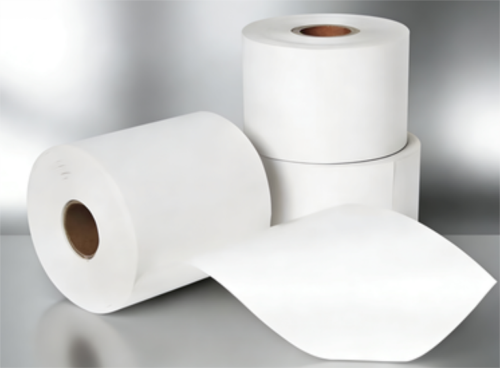
Linerless labels are often presented as a clear sustainability upgrade for retail, logistics, and food service operations. By eliminating the silicone-coated liner backing, they promise less waste, lower transport emissions, and improved material efficiency. On paper, the logic is compelling.
But sustainability in printing is rarely determined by a single design change. When linerless labels move from pilot programs into real-world operations, environmental gains can become more nuanced—and sometimes less clear-cut—than marketing claims suggest.
This article examines whether linerless labels genuinely deliver sustainability benefits at scale, and why some early adopters remain cautious.
The Sustainability Case for Linerless Labels
The environmental argument for linerless labels is built on three core claims.
1. Reduced Waste at Source
Traditional pressure-sensitive labels generate liner waste that cannot be reused and is difficult to recycle due to silicone coatings. Linerless labels eliminate this waste entirely, reducing landfill contribution and waste handling costs at distribution centers and stores.
2. Improved Material Efficiency
Without liners, label rolls contain more usable labels per roll. This reduces roll change frequency and lowers packaging material consumption. In theory, fewer raw materials are used per printed label.
3. Lower Transportation Emissions
Higher label density per roll means fewer shipments and lower transport weight. For high-volume users, this can translate into measurable reductions in fuel usage and associated emissions.
These benefits are real and well documented. However, sustainability does not stop at material inputs.
Where the Sustainability Narrative Becomes Complicated
Adhesives and Coatings Still Matter
While linerless labels remove liner waste, they rely on specialized adhesive systems and surface coatings to prevent labels from sticking to themselves. These formulations can complicate recycling and may introduce environmental trade-offs that are rarely discussed in headline sustainability claims.
In many regions, linerless labels still cannot be processed through standard paper recycling streams without specialized handling.
Recycling Infrastructure Is Uneven
A common question—are linerless labels recyclable?—does not have a universal answer. Recyclability depends on label material, adhesive chemistry, local recycling systems, and contamination levels.
In practice, many linerless labels are treated as mixed waste, especially in food and logistics environments where contamination is common. This limits the real-world impact of theoretical recyclability.
Print Quality and Reprint Waste
Sustainability gains can be quickly offset by operational inefficiencies. Linerless media is more sensitive to heat, pressure, and environmental conditions. Inconsistent print quality, adhesive buildup, or misfeeds can increase reprints and spoilage—creating waste of a different kind.
Some early adopters have reported higher initial waste rates during setup and staff training phases.
Operational Reality: Why Some Pilots Stall
The most overlooked aspect of linerless label sustainability is operational stability.
Many organizations that trial linerless labels discover that environmental benefits depend heavily on disciplined workflows, compatible equipment, and controlled environments. Without these, productivity losses and material waste can rise.
Key friction points include:
✔️Increased maintenance requirements
✔️Sensitivity to temperature and humidity
✔️Narrower tolerance margins during printing and application
✔️Limited media sourcing options compared to traditional labels
For operations optimized around speed and uptime, these issues can outweigh sustainability gains—at least in the short term.
Linerless vs Linered Labels: A Sustainability Trade-Off, Not a Verdict
The question is not whether linerless labels are sustainable, but where and how they are sustainable.
In high-volume, standardized environments—such as QSR kitchens, centralized logistics hubs, or controlled retail backrooms—linerless labels can meaningfully reduce waste and transportation impact.
In contrast, decentralized operations with varied workflows may see marginal environmental benefits diluted by increased spoilage, maintenance, and operational inefficiencies.
Sustainability, in this case, is not a universal outcome but a conditional one.
Are Linerless Labels Ready for Broad Sustainable Adoption?
Linerless labels represent a legitimate step toward waste reduction—but they are not a universal sustainability solution. Their environmental value depends on:
• Material and adhesive formulation
• Local recycling infrastructure
• Operational discipline and training
• Application suitability
As sustainability expectations rise across the printing industry, linerless labels will continue to evolve. However, meaningful environmental progress will require transparency about both benefits and limitations—not just reduced liner waste.
For decision-makers, the most sustainable choice is rarely the newest option, but the one that performs reliably with the least total waste across its entire lifecycle.