Barcode Printing Technology Trends in 2026: Key Advances Shaping the Industry
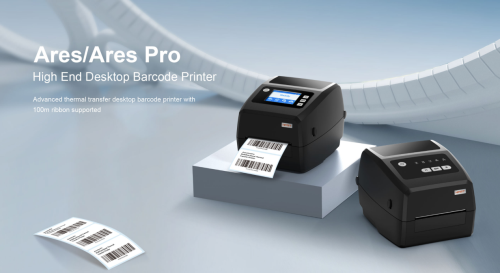
Barcode printing has long been a foundational technology for logistics, retail, manufacturing, and healthcare. While the core concept of printing machine-readable codes remains unchanged, the technology behind barcode printing has evolved significantly in response to higher volumes, tighter accuracy requirements, and increasing automation.
Today’s advances focus less on novelty and more on reliability, integration, and scalability. The following trends highlight how barcode printing technology is progressing and why it remains critical to modern operations.
Deeper Integration with Enterprise Systems
One of the most important developments in barcode printing is tighter integration with business systems such as WMS, ERP, and MES platforms. Barcode printers are no longer treated as standalone devices but as endpoints in automated workflows.
Print jobs are increasingly triggered by system events—such as receiving, picking, packing, or shipping confirmation—rather than manual input. This reduces human error, improves consistency, and allows barcode printing to scale with operational complexity.
Continued Optimization of Thermal Printing Technology
Thermal and thermal transfer printing remain the dominant technologies for barcode printing, particularly in high-volume environments. Recent improvements focus on stability rather than fundamental changes.
Key advances include:
• More durable printheads designed for extended duty cycles
• Improved heat control to maintain barcode clarity at higher speeds
• Better support for diverse label materials and adhesives
These refinements help ensure consistent barcode quality under continuous operation, which is essential for automated scanning systems.
Growing Adoption of 2D Barcodes
While 1D barcodes such as Code 128 remain widely used, 2D barcodes—including QR Code and Data Matrix—are seeing increased adoption. This trend is driven by the need to encode more data in limited space and improve fault tolerance.
In logistics and manufacturing, 2D barcodes are often used alongside traditional barcodes, allowing operations to balance compatibility with increased information density. Printer firmware and software support for 2D symbologies has become standard rather than optional.
RFID and Barcode Hybrid Printing
Another notable trend is the rise of hybrid printing systems that combine barcode printing with RFID encoding. While RFID is not replacing barcodes in most applications, hybrid approaches allow organizations to layer advanced tracking capabilities onto existing barcode workflows.
This flexibility is especially valuable in environments transitioning gradually toward higher levels of automation without abandoning established infrastructure.
Mobile and Distributed Barcode Printing
As operations become more decentralized, barcode printing is moving closer to the point of use. Mobile and wireless barcode printers enable on-demand printing in warehouses, retail floors, and field operations.
Wireless connectivity, battery efficiency, and compact design improvements have made mobile barcode printing practical for scenarios where fixed workstations are inefficient or impractical.
Increased Focus on Print Quality and Scan Reliability
As automation increases, tolerance for unreadable barcodes continues to shrink. Modern barcode printing technology places greater emphasis on print consistency, contrast control, and dimensional accuracy.
Poorly printed barcodes can disrupt automated sorting, trigger manual exceptions, and reduce throughput. As a result, print quality monitoring and standardized labeling practices are becoming essential parts of barcode printing strategies.
Early Use of Data Analytics and Predictive Maintenance
Some advanced barcode printing systems are beginning to incorporate data analytics to monitor usage patterns, printhead wear, and error rates. While still emerging, predictive maintenance capabilities aim to reduce unplanned downtime and extend hardware lifespan.
This shift reflects a broader trend toward treating barcode printing as a managed operational asset rather than a consumable tool.
Expanding Label Material Capabilities
Barcode printing technology is also evolving alongside label materials. New media options support harsher environments, including cold storage, chemical exposure, and outdoor conditions.
Advances in thermal transfer ribbons and label substrates enable barcodes to remain scannable throughout longer and more demanding product lifecycles.
Final Thoughts
Barcode printing may not attract attention like newer digital technologies, but its evolution continues to shape the efficiency of global supply chains. The most significant advances today focus on integration, durability, and consistency rather than disruption.
As logistics and manufacturing operations demand higher accuracy and automation, barcode printing remains a critical infrastructure technology—quietly adapting to meet modern requirements while continuing to deliver reliable, scalable performance.