What Is a Shipping Barcode and How Does It Work in Modern Logistics
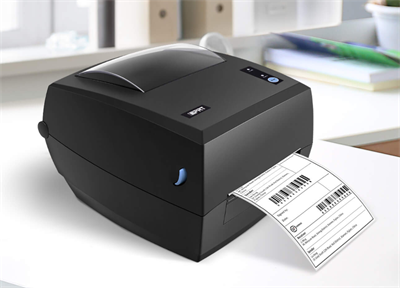
In modern logistics, speed and accuracy depend on automation. At the center of that automation is the shipping barcode—a machine-readable code that enables parcels to move through warehouses, carriers, and delivery networks with minimal manual handling.
While shipping barcodes are often taken for granted, misunderstandings about how they work, how they differ from tracking numbers, and how they should be printed are common causes of scanning failures and delivery delays. This article explains what a shipping barcode is, how barcode shipping works in practice, and why print quality matters more than many businesses realize.
What Is a Shipping Barcode?
A shipping barcode is a barcode printed on a shipping label that encodes shipment-related information in a format readable by scanners used throughout the logistics chain.
Depending on the carrier and workflow, the barcode may represent:
✔️ A shipment or tracking number
✔️ A routing or sorting code
✔️ A reference to a database record containing shipment details
Importantly, the barcode itself usually does not store full delivery information. Instead, it acts as a unique identifier that links the physical package to digital records in carrier or warehouse systems.
Shipping Barcode vs Tracking Number: What's the Difference?
A common misconception is that the shipping barcode and the tracking number are the same thing.
• Tracking number: A human-readable identifier used by customers and support teams
• Shipping barcode: A machine-readable representation used for scanning and automation
In most cases, the barcode encodes the tracking number (or a derivative of it), allowing scanners to process shipments far faster and with fewer errors than manual input.
How Barcode Shipping Works in Logistics Operations
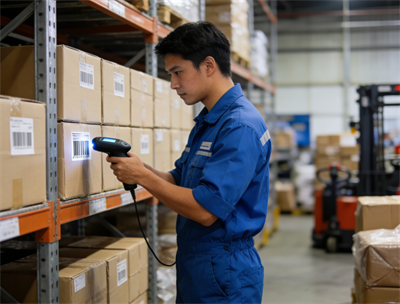
Barcode shipping relies on repeated scanning events at key points in the supply chain.
1.Label creation
When a shipment is created, a barcode is generated and printed on the shipping label.
2.Outbound scanning
The barcode is scanned at fulfillment or warehouse dispatch, linking the parcel to its outbound status.
3.Carrier sorting and routing
Automated scanners read the barcode at sorting hubs to determine routing, destination, and priority.
4.In-transit updates
Each scan updates shipment status in logistics systems, enabling real-time tracking.
5.Final delivery confirmation
The final scan confirms delivery and closes the shipment record.
Without reliable barcode scanning at each step, these automated workflows break down.
Common Barcode Types Used for Shipping
Most shipping labels use 1D barcodes rather than QR codes due to speed and compatibility.
Common formats include:
• Code 128 – Widely used for shipping and logistics due to high data density and reliability
• Interleaved 2 of 5 (ITF) – Still used in some legacy systems
• Carrier-specific formats – Optimized for internal sorting systems
The choice of barcode type affects scanning distance, tolerance to print defects, and compatibility with existing infrastructure.
Why Shipping Barcodes Fail to Scan
Scanning issues are rarely caused by the barcode format itself. The most common causes are related to printing and handling.
Poor Print Quality
Low contrast, uneven heat distribution, or worn printheads can reduce barcode readability—especially in high-speed sorting environments.
Inadequate Resolution
Shipping barcodes require sufficient print resolution to maintain bar width accuracy. Low DPI output increases the risk of misreads.
Label Damage
Creasing, smudging, moisture, or abrasion during transit can render barcodes unreadable.
Incorrect Label Placement
Barcodes placed near edges, seams, or curved surfaces are more likely to fail automated scanning.
Why Barcode Printing Matters More Than Ever
As logistics operations scale, tolerance for manual intervention continues to shrink. A single unreadable shipping barcode can trigger:
✔️Manual re-sorting
✔️Delivery delays
✔️Increased labor costs
✔️Lost tracking visibility
For this reason, barcode shipping is not just a data problem—it is a printing and materials problem. Consistent barcode quality is essential to maintaining throughput in modern logistics networks.
In modern logistics, a shipping barcode plays a critical role far beyond simple package identification. As operations scale, tolerance for manual intervention continues to shrink, and a single barcode that fails to scan can lead to manual re-sorting, delivery delays, higher labor costs, and lost tracking visibility.
Barcode shipping therefore depends heavily on print quality and label durability. Clear, consistently scannable barcodes are essential for automated sorting and real-time tracking, and their reliability is determined by how the barcode is printed, applied, and protected throughout the transportation process.