Price Tag & Barcode Label Printing Trends in Modern Retail
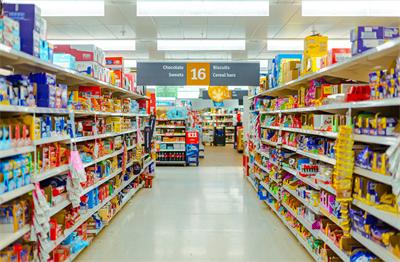
Retail labeling has quietly become a strategic operation. As pricing cycles shorten, assortments expand, and online and offline channels merge, price tags and barcode labels are no longer static identifiers. They are operational tools that support pricing accuracy, inventory visibility, and checkout efficiency across modern retail environments.
From supermarkets and fashion chains to electronics and specialty stores, the way retailers print and manage labels is changing—driven by speed, accuracy, and system integration.
Why Retail Label Printing Is Rapidly Evolving
Several pressures are reshaping how retailers handle price tags and barcode labels:
• Frequent price updates: promotions, dynamic pricing, and regional adjustments
• SKU proliferation: more variants, sizes, and short-life products
• Labor constraints: fewer staff available for manual price changes
• Compliance risks: pricing discrepancies can trigger customer disputes or regulatory issues
In this context, labeling errors are no longer minor mistakes. A mismatched price tag or unreadable barcode can disrupt checkout, create inventory inaccuracies, and damage customer trust.
From Manual Price Tags to Automated Label Printing
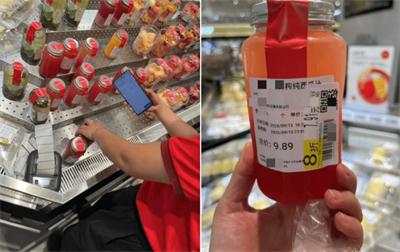
Retail label printing has followed a clear evolution path.
Early-stage operations relied on handwritten or manually typed price tags. As stores scaled, this approach proved unsustainable. Modern retailers now favor centralized, system-driven label generation, where prices and barcodes are created in bulk using barcode printers and pushed to stores directly from POS or ERP systems.
Key shifts include:
• Standardized label templates across stores
• Batch printing for promotions and price changes
• Reduced manual data entry at the store level
Automation has significantly improved consistency while reducing the time needed to roll out price updates across locations.
Barcode Labels as the Backbone of Retail Operations
In modern retail, barcode labels support far more than checkout scanning.
They enable:
• Real-time inventory tracking
• Faster receiving and replenishment
• Accurate returns and exchanges
• Omnichannel fulfillment (BOPIS, ship-from-store)
Most retailers rely on standardized barcode formats such as EAN or UPC, which integrate seamlessly with POS systems and supply-chain partners and follow widely adopted GS1 retail barcode standards.
Adhering to GS1 barcode standards ensures that products remain identifiable across manufacturers, distributors, and retailers—especially important for cross-border or multi-brand operations.
Without reliable barcode printing, inventory data quickly drifts out of sync with reality.
Electronic Shelf Labels vs. Printed Price Tags
One of the most discussed trends in retail labeling is the rise of Electronic Shelf Labels (ESL). ESLs allow prices to be updated remotely and instantly, making them attractive for high-frequency pricing environments.
However, printed price tags remain dominant in most retail formats.
Printed labels still offer:
• Lower upfront costs
• Flexibility for temporary promotions
• Simpler maintenance for small or mid-size stores
In practice, many retailers adopt a hybrid approach—using ESLs for fast-moving or high-turnover categories, while continuing to rely on printed price tags for the rest of the store.
Design and Printing Trends in Retail Price & Barcode Labels
Retail label design has become more functional and data-focused.
Current trends include:
• Smaller labels with higher information density
• Clear barcode readability prioritized over decorative design
• Multi-language or multi-currency pricing for tourist or cross-border markets
• Distinct formats for shelf labels, hang tags, and promotional tags
Retailers are also paying closer attention to print consistency. A poorly printed barcode that fails to scan at checkout causes delays that customers notice immediately.
Integration with POS and Retail Systems
Modern retail label printing rarely operates in isolation. Labels are now tightly integrated with POS, inventory management, and pricing systems.
This integration allows retailers to:
• Sync price changes automatically
• Reduce discrepancies between shelf price and checkout price
• Track label updates as part of audit and compliance processes
As retailers move toward real-time pricing and inventory visibility, label printing becomes part of the broader retail data infrastructure—not just a back-office task.
What Retailers Look for in Label Printing Solutions
When evaluating label printing setups, retailers tend to prioritize practical factors over advanced features:
✔️ Print speed and reliability during peak hours
✔️ Barcode clarity and scan success rate
✔️ Cost and availability of consumables
✔️ Ease of deployment across multiple stores
✔️ Compatibility with existing POS and ERP systems
The goal is stability. Retailers value solutions that work consistently across hundreds or thousands of daily transactions.
How Retail Label Printing Is Shaping the Store of Tomorrow
Price tags and barcode labels may appear simple, but they play a central role in modern retail execution. As stores adapt to faster pricing cycles and omnichannel operations, label printing continues to shift toward automation, standardization, and system integration.
Retailers that treat labeling as part of their core operational infrastructure—rather than an afterthought—are better positioned to maintain pricing accuracy, inventory integrity, and a smooth customer experience at scale.