Industrial Barcode Printer Automation in Smart Factories: How Smart Labeling Powers Industry 4.0
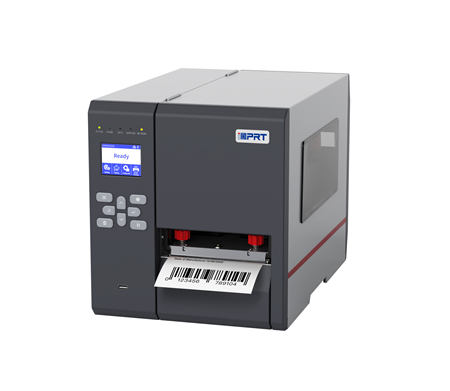
Modern manufacturing is no longer just about machines on a line—it's about data flowing seamlessly from ERP to the shop floor and back. At the heart of this flow sits a quiet but mission-critical technology: industrial barcode printer automation. In smart factories, these printers are no longer isolated devices; they are automated data-capture nodes that link products, machines, and management systems in real time.
Why Industrial Barcode Printers Matter in Smart Factories
In a traditional factory, operators often wait for labels, manually enter numbers, or re-print after a mistake. In a smart factory, industrial barcode printers are embedded into workflows so that labels are generated automatically when triggered by a system, not by a person.
This shift delivers three clear benefits:
Traceability
Every component, batch, and finished good can be uniquely identified and tracked from raw material to shipment.
Quality Control
Automated labeling reduces human error, ensuring the right content appears on the right item at the right time.
Operational Agility
When orders change or rework is needed, the system can regenerate labels on demand instead of relying on stock-label inventories.
For manufacturers pursuing Industry 4.0, these factors are not "nice to have," but core requirements for compliance, customer audits, and continuous-improvement programs.
How Industrial Barcode Printers Are Automated in Production
Industrial barcode printer automation typically follows a trigger-to-print model, where the printer is integrated into the wider digital ecosystem of the factory.
ERP/MES-Driven Labeling
When an order is released in ERP or MES, the system generates a label request that includes item number, batch, quantity, and any regulatory data. The industrial barcode printer then prints the exact label required, often without manual intervention.
PLC/SCADA Integration
On the line side, PLCs or SCADA systems can trigger the printer when a product reaches a specific station. This ensures that labels are applied only when the process step is complete, supporting lean principles such as "one-piece-flow" and mistake-proofing (poka-yoke).
Scanner-Driven Workflows
Fixed or handheld scanners read existing barcodes, and the printer generates follow-up labels such as rework tags, inspection results, or packaging labels based on that scan data.
Cloud-Connected Fleets
In more advanced setups, industrial printers are managed as part of a cloud-based fleet, where firmware updates, error logs, and supply alerts are monitored remotely. This reduces unplanned downtime and simplifies maintenance.
From a user perspective, this means fewer "manual print jobs," fewer reprints, and more reliable downstream processes—from picking and packing to quality audits.
Key Use Cases in Smart-Factory Environments
Industrial barcode printer automation is applied across many operations within a smart factory.
Assembly and Kitting Lines
Each kit or assembly step can have its own label, triggered when the station is complete. This helps ensure that every subassembly is built the correct way and that the correct wiring diagrams or checklists accompany it.
Rework and Inspection Stations
When a product fails inspection, a new rework label can be printed automatically, including the defect code and the station that needs to fix it. This closes the loop between quality data and shop-floor action.
Batch and Lot Tracking
Labels here often contain 2D barcodes or GS1-compliant codes that link the physical item to ERP inventory, batch records, and regulatory documentation. This is especially critical in pharma, food, and medical-device manufacturing.
Returns and Reverse Logistics
Even when a product comes back, industrial printers can generate new labels that encode the return reason, cost center, and disposition, so the return-flow process is as transparent as the outbound flow.
Across these use cases, the printer becomes part of the decision-making loop, not just a marking device.
Compliance, Traceability, and Audit Readiness
One of the strongest drivers of industrial barcode printer automation is regulatory and customer-mandated traceability. In highly regulated industries such as pharmaceuticals, food, and automotive, labels are often auditable documents that must:
· match ERP records exactly,
· include expiration dates or batch codes, and
· survive handling, storage, and environmental stresses.
When printing is automated, the risk of mismatched labels or "last-minute" handwritten notes drops dramatically. This makes it far easier to:
· prove end-to-end traceability during audits,
· comply with standards such as GMP, FDA FSMA-204, or UDI, and
· respond quickly in case of recalls or field investigations.
For many manufacturers, this is not just a technical upgrade—it is a risk-mitigation and compliance strategy.
Operational Efficiency and Cost-of-Ownership Benefits
Beyond compliance, industrial barcode printer automation delivers measurable operational gains.
Key Benefits Include:
· Fewer mislabeling incidents and rework, often reducing labeling-related defects by double-digit percentages.
· Reduced media and ink/ribbon waste, because labels are printed only when needed and with corect content.
· Faser changeovers and order-run transitions, since the system can regenerate labels for new SKUs or batches without manual template hunting.
Over time, these improvements translate into lower total cost of ownership (TCO), even if the initial hardware and integration cost is higher than a simple standalone printer.
How to Approach Industrial Barcode Printer Automation in Your Facility
For manufacturers asking "How do we start? three practical steps stand out:
Map Current Labeling Points
Identify where labels are currently printed and who generates them. This helps spot bottlenecks, manual errors, and compliance gaps.
Choose the Right Integration Level
Decide whether you need simple Windows-based integration, PLC-triggered workflows, or cloud-managed fleets. Not every line needs full Industry 4.0 infrastructure, but critical processes do.
Design for Flexibility and Scalability
Use label-design software that can pull data from multiple sources (ERP, MES, databases) and supports templates for different SKUs, batches, and regions. This makes future changes much easier.
By treating industrial barcode printer automation as a process-design challenge, not just a hardware purchase, manufacturers can ensure that their smart-factory initiative delivers real, measurable value.
Final Thoughts
In the era of smart factories and Industry 4.0, industrial barcode printer automation is more than a "labeling upgrade." It is a way to connect physical production with digital systems, ensuring traceability, quality, and compliance while driving efficiency across the value chain.
For plant managers, operations teams, and integration specialists, the key question is no longer whether to automate industrial barcode printing, but how quickly and effectively they can embed it into their digital transformation roadmap. When done well, the humble barcode printer becomes one of the most powerful levers for turning a traditional factory into a truly smart one.