What Is the Cheapest Way to Print Labels? (DIY & Low-Cost Options Explained)
If you're just starting a small business or shipping products from home, one question comes up quickly:
What is the cheapest way to print labels?
The short answer:
It depends on your volume, materials, and how reliable your labels need to be.
The real goal isn't just saving money upfront — it's finding the method with the lowest total cost per usable label over time.
What “Cheap” Label Printing Really Means
When people search for cheapest label printing methods DIY or low cost label printing, they usually mean one of these:
• No need to buy new equipment
• Low cost per label
• Minimal setup effort
In practice, the most cost-effective method balances:
• Material cost
• Printing efficiency
• Durability
• Risk of reprints
Cheapest Label Printing Methods at Home (Quick Comparison)
All cheapest label printing methods at home come down to how the label is printed and how it sticks.
Method | Upfront Cost | Cost per Label | Ease of Use | Best For |
Paper + Tape / Glue | None | Very low | Medium–Low | Testing, temporary use |
Sticker Paper + Home Printer | Low | Moderate | Easy | Small business, daily use |
Thermal Label Printing | Medium | Low (at scale) | Very Easy | Shipping, barcode labels |
Quick takeaway:
✔️ The absolute cheapest DIY option is paper + tape or glue
✔️ The most practical low-cost option is sticker paper
✔️ The most cost-efficient long-term method is thermal printing
Inkjet vs Laser vs Thermal: Which Is Actually Cheaper?
As your volume grows, the printer type becomes the biggest cost factor.
Inkjet Printers
• Low upfront cost
• Suitable for color labels and light use
• Ink costs can increase with higher volume
• Labels may be sensitive to water or smudging
Laser Printers
• More durable than inkjet for text-based labels
• Toner lasts longer than ink in many cases
• Works well in office environments
• Not always ideal for all label materials
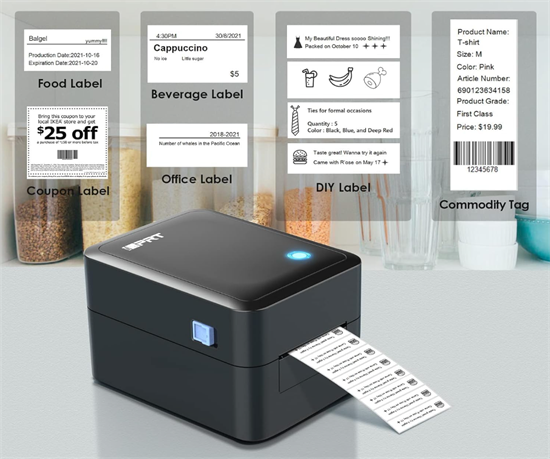
Thermal Printers
• Common in logistics and barcode printing
• Direct thermal requires no ink or toner
• Thermal transfer uses ribbon (for higher durability)
• Fast and consistent for repetitive tasks
Industry insight:
For shipping and barcode applications, thermal label printer is often the most cost-efficient option over time — especially when label volume increases.
Which Method Is Cheapest for Your Situation?
The cheapest solution depends on how many labels you print and how critical reliability is.
Beginner (Very Low Volume)
• Use what you already have
• Paper or sticker sheets with a home printer
• Focus: zero upfront cost
Small Business / Growing Volume
• Upgrade to better materials (sticker paper)
• Consider switching to thermal printing
• Focus: reducing per-label cost and manual work
Regular Shipping / High Volume
• Thermal printing becomes more efficient
• Standardized labels and workflow improve consistency
• Focus: speed, reliability, and scalability
Hidden Costs Most Beginners Miss
The cheapest method on paper isn't always the cheapest in practice.
Consider:
• Labor time → cutting and applying labels manually
• Reprints → smudging, misalignment, scan failures
• Durability issues → labels falling off during shipping
• Delays → slow printing affecting fulfillment
Key insight:
A label that fails can cost more than the one you saved money on.
Practical Recommendation
If you're unsure where to start:
• Use DIY methods for testing and very low volumes
• Use sticker paper for better presentation at low cost
• Move to thermal printing when consistency and efficiency matter
Final Answer
So, what is the cheapest way to print labels?
· For short-term and minimal cost:
→ Paper + tape or glue
· For balanced cost and usability:
→ Sticker paper with a home printer
· For long-term efficiency:
→ Thermal label printing
FAQ: Cheapest Label Printing
Can I print labels without a special printer?
Yes. Most DIY methods use standard home printers. You can also design labels yourself and print them at a local print shop.
Is DIY label printing really cheaper?
For very small volumes, yes. But as volume increases, material waste and labor time can make DIY less cost-effective.
When should I switch to a thermal printer?
When you print labels regularly and need consistent quality, speed, and lower long-term cost.
Final Thought
The cheapest label printing method is not always the one with the lowest price per sheet. It's the one that minimizes waste, time, and failure — while still meeting your business needs.