Why Printheads Fail: A Technical Guide to Thin Film, Thick Film, and Coating Materials
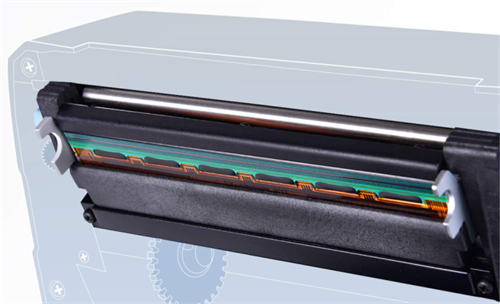
When a thermal printhead fails, operators often blame printer settings or mechanical error. However, the root cause frequently lies in the materials of the printhead itself.
A thermal printhead consists of three engineered layers: the ceramic substrate, the resistive heating element, and the protective coating. Each layer plays a specific role in heat management and abrasion resistance.
This guide analyzes these thermal printhead materials to help you understand printhead durability and select the right technology for your specific application.
1. The Substrate: Managing Heat Dissipation
The base layer of almost all professional thermal printheads is Ceramic (Alumina). Manufacturers select ceramic for its high thermal conductivity and stability under high temperatures.
The substrate performs a critical function: heat dissipation. The printhead must heat up to activate the label or ribbon, but it must also cool down immediately to print the next dot.
The Risk of Poor Heat Management:
If the substrate fails to dissipate heat efficiently, "heat accumulation" occurs. This excess heat prevents the heating elements from cooling, leading to blurred images. In extreme cases, the ceramic cracks or the heating elements burn out, causing permanent "Dead Dots."
2. The Heating Element: Thick Film vs. Thin Film Technology
The heating element is the resistor that generates the thermal energy. The manufacturing process of this layer defines the two main categories of printheads: Thin Film and Thick Film.
Thin Film Technology
Manufacturers create Thin Film printheads using a vacuum sputtering process (similar to semiconductor manufacturing). This deposits an extremely thin, flat layer of resistive material onto the substrate.
● Performance: Thin Film elements heat up and cool down nearly instantly. This rapid response allows for high-speed printing and high resolutions (600 DPI).
● Technology Leader: Kyocera is the primary driver of this technology, often using it in "Near Edge" printheads for high-speed packaging lines.
● Durability: Because the layer is microscopic, it is vulnerable to abrasion. Thin Film heads typically require premium ribbons (like Resin) to protect the surface.
Thick Film Technology
Manufacturers create Thick Film printheads by screen-printing a resistive paste onto the substrate and firing it in an oven. This results in a physically thicker, slightly raised heating element.
● Performance: The larger mass holds heat longer, which limits maximum print speed and resolution. This technology is standard for 203 DPI and 300 DPI applications.
● Technology Leader: ROHM specializes in this technology, prioritizing physical robustness over extreme speed.
● Durability: Thick Film heads offer superior resistance to abrasion and impact. They perform well in harsh environments involving dust or rough label media.
3. The Protective Coating: Resisting Abrasion
The final layer is a hard protective glaze that covers the heating elements. This material makes direct contact with the label or ribbon.
This coating determines the ultimate printhead durability. It faces two primary threats:
1.Abrasive Wear: The friction from paper labels (especially Direct Thermal media) wears down the coating over time, eventually exposing the heating elements.
2.Chemical Corrosion: Acids and chemicals present in thermal paper can react with the coating under high heat.
To extend component lifespan, manufacturers now utilize advanced Abrasive Resistance Coatings. High-end industrial printheads often feature Diamond-Like Carbon (DLC) layers. These hard coatings significantly reduce friction and prevent chemical corrosion, allowing the printhead to exceed 100km of print distance.
Conclusion
Printhead failure often results from selecting the wrong material for the application.
● Thin Film printheads provide precision and speed but require high-quality media to prevent damage.
● Thick Film printheads offer robustness and are the better choice for rough environments or standard shipping labels.
By understanding the differences in Kyocera vs. Rohm printhead technology, buyers can predict the lifespan of their equipment and reduce long-term replacement costs.