How Barcode Label Printing Enables Batch and Lot Traceability
Imagine a product recall. Without a clear system, it's a logistical nightmare. With the right system, you can pinpoint affected items in minutes. The difference? Effective batch and lot traceability barcode labels. These aren't just stickers; they're the foundation of modern supply chain safety and efficiency.
Barcode label printing turns abstract batch numbers into scannable, actionable data. This simple act connects every item to its origin, journey, and destination, creating a digital thread you can follow in an instant.
Why Batch and Lot Traceability Matters
Traceability is your safety net. It's the ability to track any product, ingredient, or component one step back and one step forward in your supply chain. For food, pharmaceuticals, electronics, and manufacturing, it's non-negotiable.
It ensures regulatory compliance, manages recalls precisely, improves quality control, and builds consumer trust. When every item carries a unique identifier, you move from guessing to knowing.
The Role of Barcode Label Printing for Traceability
Printed barcode labels are the physical link between your product and your digital tracking system. A handwritten lot number on a box is prone to error and slow to process. A barcode is fast, accurate, and consistent.
Printing these labels on-demand means you can encode critical data like batch numbers, manufacture dates, expiration dates, and source locations directly into a scannable symbol. This data becomes accessible at every touchpoint with a simple scan.
Key Data Points on a Traceability Label
A robust lot traceability label printing setup will typically include:
Unique batch or lot number
Manufacture date and time
Best-by or expiration date
Supplier or production line code
Product SKU or item number
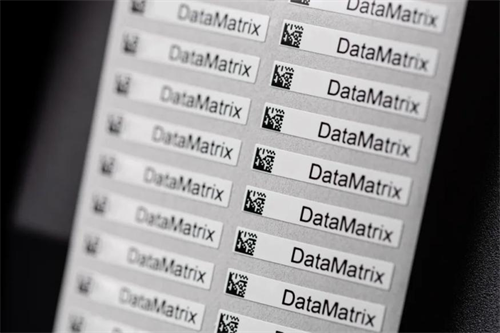
Compliant barcode symbology (like GS1-128 or Data Matrix)
Designing Effective Batch Barcode Labels
Not all labels are created equal. Your lot tracking barcode labels must survive their environment. A label in a frozen food chain faces different challenges than one in an automotive parts warehouse.
Consider these factors for durable, reliable labels:
Label Material: Smudge-proof, water-resistant, or extreme-temperature adhesives.
Barcode Type: 1D codes for simple data, 2D Data Matrix codes for more information in a small space.
Print Quality: High-resolution printing ensures scanners can read the code every time, even if smudged.
Human-Readable Info: Always print the batch number clearly alongside the barcode as a backup.
Implementing a Traceability System in Your Workflow
Adding batch number barcode labels to your process is a step-by-step upgrade. Start by defining what you need to track and where scans will happen—receiving, production, packaging, shipping.
Integrate your label printing software with your inventory or ERP system. This allows batch data to flow automatically to the label, eliminating manual entry and errors. Then, place scanners at key decision points to capture the movement of each batch, building its history in real time.
A Simple Scenario: From Receiving to Recall
You receive a pallet of components. You scan the supplier's barcode label, which logs the batch into your system. During assembly, you scan your own internal batch barcode labels onto the finished goods. Later, a flaw is found in that original supplier batch.
Instead of pulling every product off the shelf, you query your system. In seconds, you have a list of every finished item containing that specific component batch. Your response is targeted, minimizing waste and customer impact.
Your Path to Better Tracking
The goal of batch and lot traceability barcode labels is clarity. They transform reactive problem-solving into proactive management. By investing in the right label printing and scanning setup, you're not just complying with rules—you're building a smarter, more resilient operation.
Begin by auditing a single product line. Map where traceability fails today and where a scannable barcode label could bridge the gap. That first step is often the most powerful.
FAQs about Batch and Lot Traceability
What's the difference between a batch and a lot?
Often used interchangeably, a "lot" usually refers to a single production run, while a "batch" can be a specific grouping within that run. For labeling, both require a unique identifier to track them.
Can I use my existing printer for barcode label printing for traceability?
It depends. Standard office printers may not handle industrial label materials or durable adhesives. For permanent, scannable labels in harsh environments, a dedicated thermal transfer or industrial inkjet printer is often recommended.
What is the best barcode type for lot tracking?
GS1-128 is a global standard for shipping and logistics, encoding lots and dates. For smaller items or more data (like serial numbers), a 2D Data Matrix code is compact and highly reliable.
How small can batch barcode labels be?
With 2D barcodes like Data Matrix, you can print effective, scannable labels as small as a few millimeters square, ideal for electronics, pharmaceuticals, and small parts.
Recent posts
Previous article