A Complete Guide to IATA Barcode Standards for Cargo, Baggage, and Boarding Passes
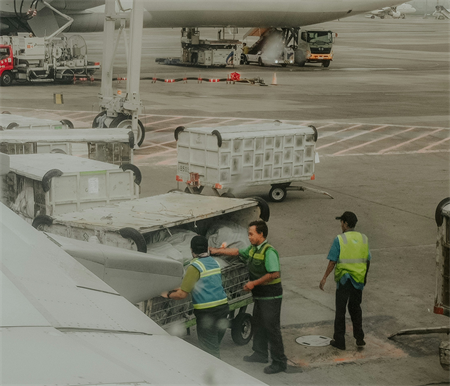
IATA barcodes provide a unified way to identify cargo, baggage, and passengers across the global aviation network. They ensure that every airport, airline, and handling system can read the same data accurately, supporting automated processing and reducing operational errors.
What Is an IATA Barcode?
An IATA barcode is a standardized machine-readable code used in aviation operations. It appears on three major items:
• Air cargo labels (Air Waybill / ULD labels)
• Checked baggage tags
• Passenger boarding passes
Each serves a different function, uses a different encoding format, and follows different printing requirements—but all share one purpose: to keep global operations synchronized and error-free.
1. Air Cargo Barcodes (IATA Resolution 606)
For cargo shipments, the barcode linked to the Air Waybill (AWB) is the key identifier. It is typically encoded in Code 128 and represents the 11-digit AWB number. Cargo terminals rely on it from the moment a shipment is accepted to the moment it leaves the destination warehouse.
While “Code 128 + 11 digits” sounds simple, the actual Resolution 606 includes additional considerations: bar height, X-dimension, quiet zones, placement rules, and validation requirements. Operators often customize these parameters—so verification, not assumption, is what ensures compliance.
2. Baggage Barcodes (IATA Resolution 740)
Baggage tags use a familiar linear Code 128 symbol containing the 10-digit License Plate Number, which uniquely identifies each checked bag. This number follows the IATA Baggage Standards, which define how baggage should be identified and tracked across airports.
One nuance often overlooked:
The 1D baggage barcode itself does not contain routing or airline information. Routing and airline metadata are handled by BRS and DCS systems, or occasionally through optional 2D extensions—not the main Code 128 barcode.
With more than 4.5 billion bags processed every year, the simplicity and durability of the License Plate system is one of the biggest reasons mishandling rates have been reduced significantly over the past decade.
3. Boarding Pass Barcodes (BCBP)
The barcode printed on paper boarding passes uses PDF417, while mobile boarding passes use Aztec or QR codes. These formats encode structured information defined in the BCBP standard, including:
• Passenger Name Reference (PNR)
• Ticket number
• Flight number and date
• Booking class
• Version and data elements specified by IATA
This consistency allows airports worldwide to scan passengers swiftly at check-in counters, security controls, and boarding gates—regardless of the origin of the boarding pass.
How IATA Barcodes Ensure Global Compatibility
Although the formats differ, IATA barcodes share several characteristics that enable worldwide interoperability:
• A unified data structure so systems interpret the same fields consistently
• Predictable symbology (Code 128 for cargo & baggage; PDF417/Aztec/QR for boarding passes)
• Strict rules for readability to support automated sorting equipment and high-volume scanning environments
The strength of the system lies not in the barcode format itself—but in its global consistency.
Printing IATA Barcodes
Different aviation workflows use different printing technologies. This distinction is essential.
Cargo Labels
Cargo environments require durability against abrasion, humidity, stacking, and long transport cycles.
For these reasons:
• Thermal Transfer printing is widely used
• Resin ribbons provide maximum durability
• PET/PP synthetic materials withstand handling demand
• 300 dpi is recommended but not mandatory (203 dpi can pass validation with proper sizing)
Baggage Tags
Airport check-in systems—both staffed counters and self-service kiosks—almost universally use Direct Thermal (DT) printing.
This means:
• No ribbon is used
• Tags are printed on thermal-coated synthetic films
• 203 dpi is the standard resolution
• Materials prioritize resistance to friction and humidity
Baggage tags are printed in massive volume, which makes direct thermal the most practical and cost-efficient choice globally.
Boarding Passes
• Paper boarding passes — Direct Thermal, PDF417
• Mobile passes — Aztec / QR, scanned from a phone screen
This workflow requires fast, economical, and high-contrast printing rather than long-term label durability.
Typical Issues and How to Avoid Them
Operational disruptions often arise from predictable mistakes:
• Quiet zones too small
• Barcodes printed too dense or too small
• Poor contrast leading to failed scans
• Labels placed on curved or textured surfaces
• Baggage tags that tear or smudge during handling
These problems are easily avoided with straightforward best practices: using high-contrast printing, ensuring flat placement, validating sample scans, and choosing materials suited for the environment.
A Glimpse into the Future: RFID & Digital Transformation
IATA is actively moving toward more intelligent identification technologies:
• RFID baggage tracking (Resolution 753)
• ONE Record data standard for digital cargo information exchange
• Hybrid OCR + barcode systems for increased accuracy
While barcodes remain foundational, these technologies will enhance transparency, automation, and tracking across the entire aviation ecosystem.
Frequently Asked Questions
Q1: What is an IATA barcode used for?
It identifies cargo, baggage, or passengers in a globally interoperable way across aviation systems.
Q2: What is the standard baggage barcode format?
A Code 128 barcode encoding a 10-digit License Plate Number, defined by IATA Resolution 740.
Q3: Do baggage tags require thermal transfer printing?
No. They are printed using direct thermal printers, not thermal transfer.
Q4: Is 300 dpi required for cargo barcodes?
No. It is recommended, but 203 dpi is acceptable if barcode sizing passes quality validation.