2 Inch vs 3 Inch Thermal Printer Mechanism: Key Differences & Applications
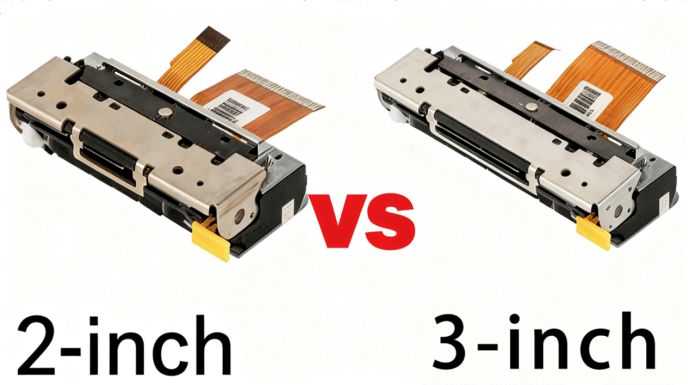
2 inch and 3 inch thermal printer mechanisms are the most commonly used sizes in embedded printing. If you're building a POS terminal, kiosk, or any device with built-in receipt or label printing, you've likely asked: Which should I choose—2 inch or 3 inch?
In this article, we compare 2 inch and 3 inch thermal printer mechanisms—their differences, specifications, and typical applications—to help you choose the right fit for your device.
Understanding 2 Inch and 3 Inch Thermal Printer Mechanisms
When we say "2 inch" or "3 inch" thermal printer mechanism, we’re referring to the maximum printing width supported by the mechanism, usually 48mm for 2 inch and 72mm for 3 inch.
These sizes are common in receipt printers, label machines, and ticketing devices. A small 2 inch mechanism is great for compact devices and works with 58mm paper rolls. A 3 inch mechanism, on the other hand, supports 80mm rolls and gives you more room to print extra info like logos, barcodes, or longer receipts.
The choice between the two impacts your device’s size, paper cost, print content layout, and end-user experience.
2 Inch vs 3 Inch Thermal Printer Mechanisms: Key Differences
Feature | 2 Inch Mechanism (58mm) | 3 Inch Mechanism (80mm) |
Paper Width | 58mm | 80mm |
Print Width | ~48mm | ~72mm |
Paper Roll Size | Smaller (ideal for compact spaces) | Larger (higher capacity) |
Print Content | Suitable for simple receipts | Allows detailed receipts with logos, QR codes |
Application Device | Handheld/mobile printers, POS terminals | Kiosks, retail checkout counters, ticketing terminals |
Cost | Lower paper and hardware cost | Slightly higher cost, more content space |
Power Consumption | Slightly lower | Slightly higher due to wider print head |
Mounting Size | Compact | Requires more space |
When to Choose a 2 Inch Thermal Printer Mechanism
A 2 inch thermal printer mechanism is the preferred choice when your application prioritizes:
✅ Compact Size
Smaller devices like handheld printers, portable POS terminals, and battery-powered systems benefit from the space-saving design of a 2 inch printer.
✅ Minimal Print Requirements
If you're printing simple receipts, basic labels, or short transaction summaries, 58mm paper width is usually sufficient.
✅ Power Efficiency
These printers typically consume less power, making them ideal for mobile and battery-operated solutions.
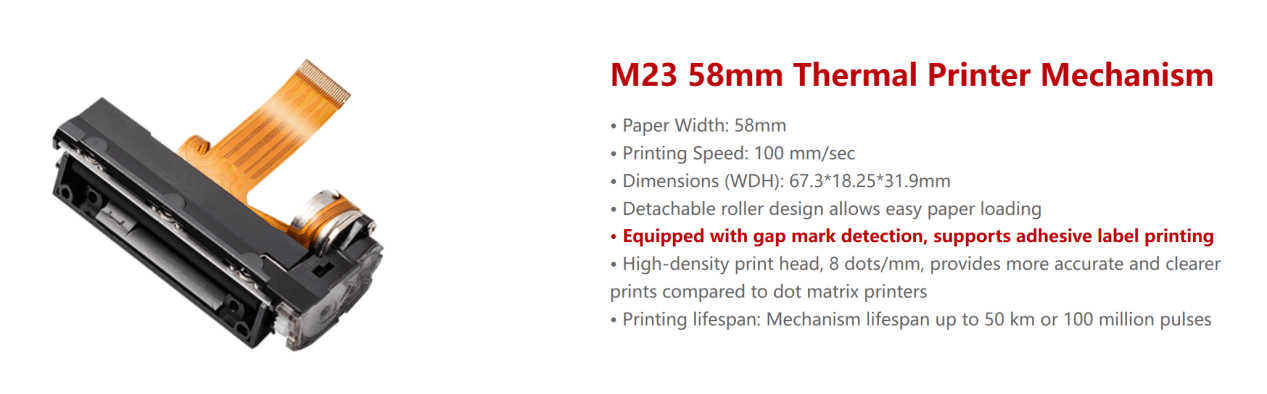
Applications of 2 inch thermal printer mechanism:
●Mobile POS systems
●Restaurant order printers
●Parking ticket dispensers
●Handheld label printers
When to Choose a 3 Inch Thermal Printer Mechanism
A 3 inch thermal printer mechanism is the better option when your application requires:
✅ Rich Content Layout
With up to 72mm print width, you can include logos, promotions, barcodes, and additional transaction details.
✅ High-Volume or Public-Facing Printing
Retail, banking, and ticketing systems benefit from faster printing and a more professional look on 80mm paper.
✅ Larger Paper Capacity
Because it supports wider rolls, the 3 inch mechanism reduces the need for frequent paper changes.
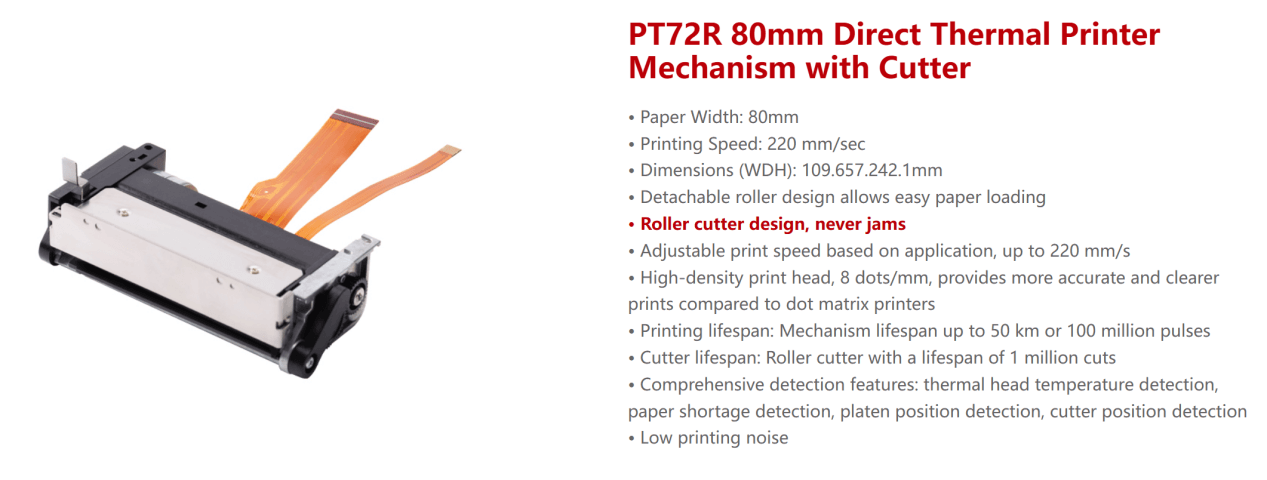
Applications of 3 inch thermal printer mechanism:
●Supermarket and department store POS
●Self-service kiosks and ATMs
●Bus/train ticketing terminals
●Government service machines
Other Factors to Consider Before Choosing
⚠️ Device Design & Internal Space
Always evaluate your device’s internal structure. A 3 inch mechanism will require more space for the paper path, roll, and mounting frame.
⚠️ Interface & Driver Compatibility
Make sure the thermal printer mechanism you choose is compatible with your controller board and software requirements (USB, RS232, TTL, etc.).
⚠️ Printing Speed and Durability
Some high-end 2 inch mechanisms offer comparable speed and printhead life to 3 inch models. Evaluate actual specs before assuming wider = better.
Many thermal printer mechanism manufacturers offer both options—often with add-ons like auto cutters, custom mounting brackets, and flexible interface configurations. If you're unsure which format fits your needs best, it's worth consulting with a supplier that provides engineering support and integration guidance.