Common Barcode Printer HSN Codes and GST Rates: A Classification Guide
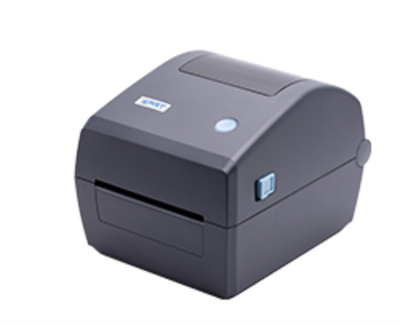
For logistics managers, retail business owners, and tax professionals, navigating tax compliance and customs documentation requires precise terminology and careful classification. During invoicing, auditing, or importing, identifying the correct Harmonized System of Nomenclature (HSN) code for hardware is essential to prevent compliance issues.
While classifications are subject to product specifications and local tariff interpretations, this guide explores the common HSN classification pathways for barcode printers, associated GST rates, and related accessories.
Quick Reference: Typical Classification for Barcode Printers
• Commonly Used HSN Code: 8443.32.90 (Subject to final product specifications and connection capabilities).
• Typical GST Rate: 18% (Based on standard tax schedules for printing machinery, subject to latest local amendments).
Disclaimer: Classification and tax rates vary by jurisdiction and the specific technical parameters of the device. Always consult with a certified customs broker or tax professional before finalizing documentation.
1. Understanding the HSN Code Hierarchy for Printing Machinery
The Harmonized System (HS) standardizes the classification of physical goods globally. Under Chapter 84, which covers mechanical appliances and machinery, barcode printers are typically grouped under Heading 8443.
To understand why a thermal transfer printer or direct thermal label printer is frequently classified under HSN code 8443.32.90, we can examine the structure under standard tariff schedules:
• Chapter 84: Nuclear reactors, boilers, machinery, and mechanical appliances; parts thereof.
• Heading 8443: Printing machinery used for printing by means of plates, cylinders, and other printing components of heading 8442; other printers, copying machines, and facsimile machines, whether or not combined; parts and accessories thereof.
• Subheading 8443.32: Other printers, copying machines, and facsimile machines, whether or not combined: Other, capable of connecting to an automatic data processing (ADP) machine or to a network.
• Tariff Item 8443.32.90 (Other): This specific sub-heading frequently covers computer-connected thermal printers, point-of-sale (POS) receipt printers, and industrial or desktop label printers that do not fall under specific laser, inkjet, or dot-matrix subheadings.
Under international customs standards, connectivity is a major determining factor. Devices that receive data from a computer system to output physical media are generally directed to this category.
2. Typical GST Rates on Barcode Printers
In many jurisdictions, such as India, indirect tax structures govern how electronic and industrial machinery is taxed.
• In most standard transactions, barcode printers and related printing machinery typically attract an 18% GST rate under the 8443 classification.
• This rate is typically split as 9% CGST and 9% SGST for intrastate sales, or applied as 18% IGST for interstate and import transactions.
• Because tax slabs are subject to periodic governmental updates and localized amendments, businesses should always verify the latest notification from the Central Board of Indirect Taxes and Customs (CBIC) or relevant regional authorities.
3. Distinguishing Between Printers, Scanners, and Accessories
A common pitfall in procurement and accounting is applying a single HSN code to a mixed shipment of barcode equipment. Under customs rules, printers and scanners operate on entirely different mechanical principles, placing them under distinct chapters of the tariff schedule.
The table below provides indicative HSN classifications for standard barcode hardware and consumables. Actual classifications may vary based on exact product specifications, material composition, and local tariff interpretations.
Indicative Product Category | Common Function | Representative HSN Code | Typical GST Rate |
Barcode Printer | Thermal / thermal transfer label printing | 8443.32.90 | 18% |
Barcode Scanner | Optical / laser reader for data capture | 8471.90.10 (or 8471.60.27) | 18% |
Printer Printhead | Essential heating element for printing | 8443.99.59 (or 8443.99.90) | 18% |
Thermal Ribbon / Carbon Ribbon | Ink donor element for transfer printing | 9612.10.10 | 18% |
Barcode Paper Labels | Adhesive label rolls | 4821.10.10 | 18% |
Using distinct codes for different items prevents the error of grouping auxiliary data-capture hardware (scanners) under printing machinery, helping to ensure compliant GST billing for printers and accessories.
4. Key Factors Influencing Classification: Connectivity and Spare Parts
Connection Capabilities
The classification of portable, wireless, or mobile barcode printers (such as those using Bluetooth or Wi-Fi) hinges primarily on their ability to connect to an automatic data processing (ADP) machine or network.
• If a mobile printer connects to a smartphone, tablet, or handheld warehouse terminal to execute print jobs, it generally aligns with 8443.32.90 because those source devices are considered ADP units.
• If a printing device lacks any data-reception connectivity and operates through entirely independent, analog, or manual controls, it might require evaluation under subheading 8443.39.90 (other printing machinery). However, final determination requires a thorough analysis of the device's technical specifications.
Parts and Accessories
Classifying spare parts such as printheads, rollers, or logic boards is highly complex. Under sea or air customs procedures, parts must be evaluated using standard General Rules of Interpretation (GRI) and Section XVI, Note 2, which governs whether a part is "solely or principally used" with a specific machine. For instance, while printheads often fall under 8443.99, generic electronic components or standard mechanical parts might be directed to their own respective chapters (such as Chapter 85 for generic electrical boards).
5. Frequently Asked Questions (FAQs)
Q1: Can I claim Input Tax Credit (ITC) on barcode label printers?
A: Generally, yes. Registered businesses that purchase barcode printers for commercial purposes (such as inventory management or logistics) can typically claim ITC, provided the vendor issues a valid tax invoice with the matching HSN code and the transaction is reported correctly.
Q2: Does the HSN code change based on print technology (e.g., Direct Thermal vs. Thermal Transfer)?
A: Under most tariff schedules, both direct thermal and thermal transfer systems are classified under the same general subheading of 8443.32.90 because they share similar connectivity and processing frameworks.
Q3: Is the HSN code for barcode printers identical worldwide?
A: Only partially. The Harmonized System (HS) standardizes the first six digits (8443.32) internationally. The remaining digits (making up the 8-digit HSN or 10-digit tariff code) are determined by individual nations to meet their specific statistical and duty requirements.
The Bottom Line
Accurate tax and customs classification requires an understanding of both the mechanical function of a device and its technical specifications. While HSN 8443.32.90 is a highly common classification for computer-connected barcode printers, it is not a one-size-fits-all answer. Businesses should systematically review product data sheets and coordinate with certified customs brokers to ensure compliance with the latest regional tariff rulings.